Outlining Short Stories Structures Tales for Maximum Impact
- 1.
What even *is* outlining—like, seriously?
- 2.
The 5 basic principles of outlining (no fluff, just meat)
- 3.
Breaking down: the 5 stages of a short story (spoiler: it’s not just “beginning, middle, end”)
- 4.
JK Rowling’s outline method (yes, she’s a novel-writer—but dang, her technique slaps for shorts too)
- 5.
Tools of the trade: analog vs digital (spoiler: your grandma’s notebook might win)
- 6.
Beat sheets for shorts: why the Save the Cat! model needs a haircut
- 7.
Character arcs in miniature: how to sketch soul in under 500 words
- 8.
Dialogue & subtext: planning the unsaid (yes, you can outline *silence*)
- 9.
Common outlining traps (and how to dig yourself out)
- 10.
From outline to draft: crossing the threshold (and internal links to keep you grounded)
Table of Contents
outlining short stories
What even *is* outlining—like, seriously?
Ever sit down to write a short story, get three sentences in, and then—bam—your brain taps out like a washed-up boxer in round two? Yeah, we’ve been there too. Outlining short stories ain’t about squashing your creativity. Nah, it’s more like packin’ a lunch before a long hike—you don’t wanna starve halfway up the ridge. A tight outline helps you dodge the dreaded “plot black hole” where characters vanish, motivations turn to mush, and your ending looks like it was drafted by a sleep-deprived raccoon. Think of outlining short stories as your GPS. Not the fancy kinda with lane-assist and traffic cams—more like that old TomTom that *mostly* knows where it’s goin’, but occasionally tells you to “make a U-turn in 200 feet… on a cliff.” Still beats wanderin’ blind, y’all.
The 5 basic principles of outlining (no fluff, just meat)
Let’s cut the academic jargon—here’s how outlining short stories *actually* works in the real world, from folks who’ve scribbled more drafts than coffee stains on their desks:
- Clarity over cleverness—if your outline needs a decoder ring, it’s already failin’.
- Flexibility is non-negotiable—your outline’s a roadmap, not a prison sentence.
- Character-first, not plot-first—nobody cares if the asteroid hits Mars if they don’t care about the dude who forgot his helmet.
- Economy—short stories ain’t novels. Every beat must *earn its keep*.
- Reverse-engineer the ending—know where you’re landin’ *before* you hit the runway.
These five? They’re the bedrock. Miss one, and your outlining short stories effort turns into a Jenga tower in a stiff breeze. Been there. Cried over that.
Breaking down: the 5 stages of a short story (spoiler: it’s not just “beginning, middle, end”)
Y’all ever hear someone say, “Short stories just need a start, some conflict, and a wrap-up”? Cute. That’s like sayin’ a soufflé just needs “eggs and heat.” Here’s the *real* five-stage flow most pros use when outlining short stories:
| Stage | Purpose | Outlining Short Stories Tip |
|---|---|---|
| Inciting Spark | Disrupts status quo | Make it visceral—no “one day…” nonsense. |
| Complication Loop | Raises stakes & reveals character | Layer 2–3 mini-obstacles. Keep it tight. |
| Point of No Return | Decision or event that changes direction irrevocably | This is where your protagonist *chooses* the fire. |
| Climax/Revelation | Emotional & narrative peak | Not always action—sometimes it’s a whisper in a silent room. |
| Resonant Echo | Aftermath that lingers | Last line should hum in the reader’s chest for hours. |
When outlining short stories, most new writers skip Stage 3—the Point of No Return—and wonder why their climax feels weightless. That pivot? That’s where the soul lives. Don’t skimp.
JK Rowling’s outline method (yes, she’s a novel-writer—but dang, her technique slaps for shorts too)
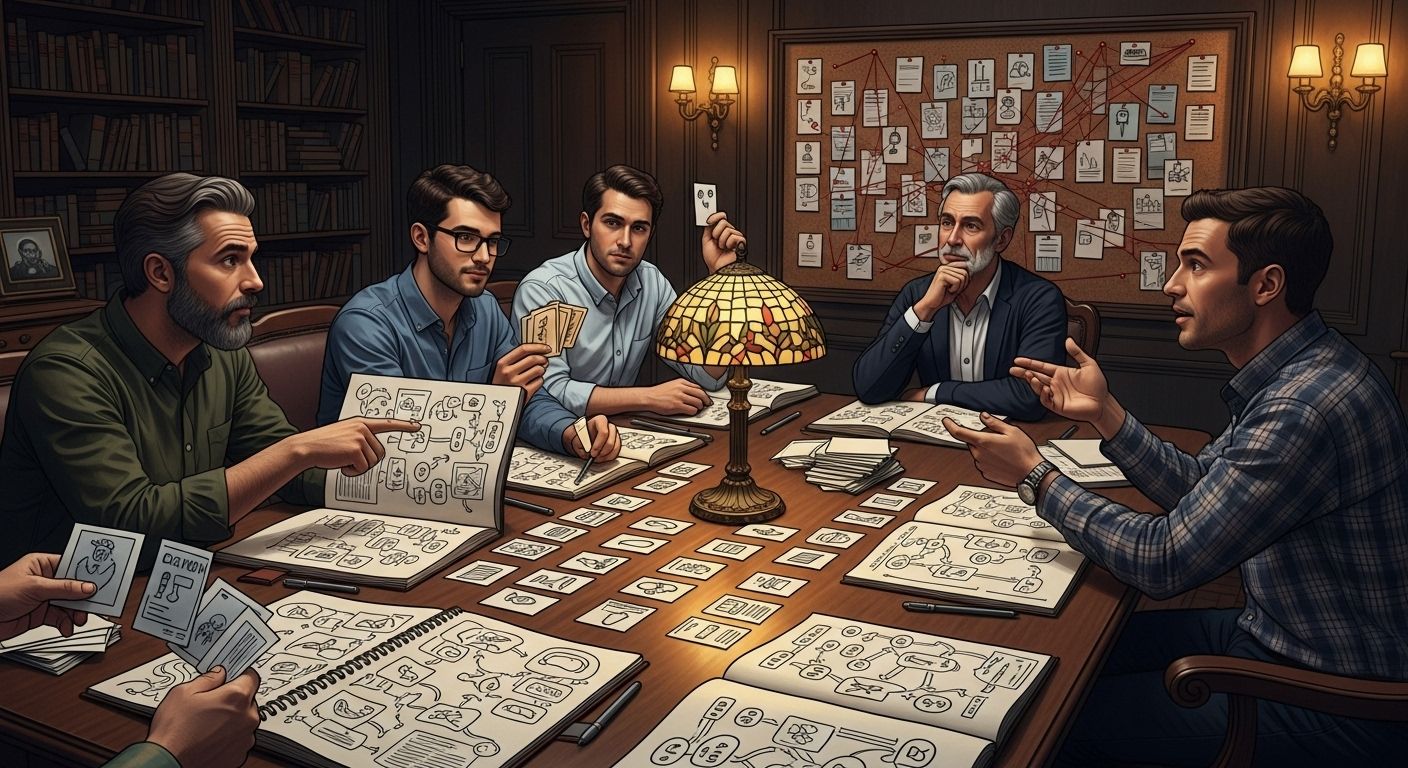
Before you roll your eyes—*“She writes 700-page doorstops, what’s she know ‘bout short fiction?”*—hear us out. JK Rowling’s color-coded spreadsheet system? Pure gold—even for outlining short stories. She mapped *every* character arc, subplot, and clue *years* ahead. For short fiction? Scale it down: one page. One. Use columns like “Beat,” “Emotion Shift,” “What’s Hidden,” and “What’s Revealed.” We tried it—scribbled three competing versions of a 2,500-word ghost story in one afternoon. All three worked. One even made our editor cry (the good kind). Pro tip: don’t over-engineer the grid. Keep it messy. Her actual notebooks? Full of coffee rings, crossed-out arrows, and margin doodles of goblins holding tiny protest signs. Perfection is for tax forms—not art.
Tools of the trade: analog vs digital (spoiler: your grandma’s notebook might win)
We tested *everything* for outlining short stories—Scrivener, Notion, Milanote, sticky notes on the fridge, even that weird voice-memo app that transcribes your mutterings after two espressos. What worked best? A cheap $2.99 spiral notebook and a Pilot G2 0.7mm black pen. Why? Because friction matters. Typing’s too fast—you outrun your subconscious. Pen + paper? Forces you to slow down. Lets the weird, half-baked ideas *breathe*. Plus, you can draw arrows *anywhere*. Crisscross. Circle stuff twice. Scribble “WTF IS HIS MOTIVE???” in the margin with three underlines. Digital tools clean that up. And sometimes? The mess *is* the method.
Beat sheets for shorts: why the Save the Cat! model needs a haircut
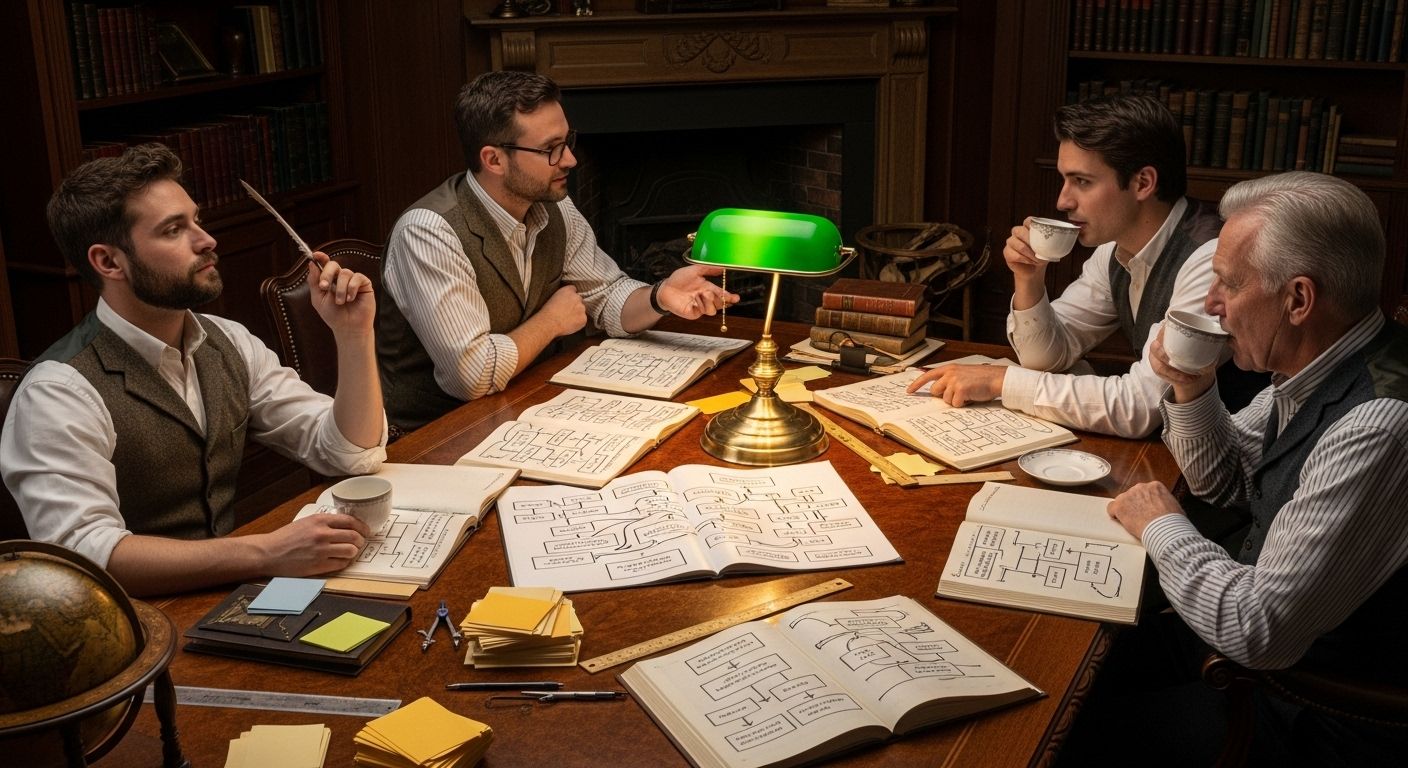
Look—Blake Snyder’s *Save the Cat!* is a powerhouse… for screenplays and novels. But crammin’ 15 beats into a 3,000-word short story? That’s like tryin’ to fit a pickup truck into a Smart car garage. You *gotta* trim. Here’s our modified 7-beat sheet for outlining short stories that actually fits:
- 0% – Hook + Status Quo (establish world & wound)
- 10% – Spark (the “oh crap” moment)
- 25% – First Pushback (character resists change)
- 45% – Point of No Return (irreversible choice)
- 65% – Twist/Revelation (not plot twist—*truth* twist)
- 85% – Climax (action or quiet rupture)
- 100% – Resonant Echo (leave ‘em haunted)
Notice what’s *missing*? No “Fun and Games” section. No “B Story.” Short fiction thrives on compression. When outlining short stories with this beat sheet, we cut a draft from 4,200 words to 2,800—and it hit *harder*. Less fat, more marrow.
Character arcs in miniature: how to sketch soul in under 500 words
You ain’t got chapters to ease into who your protagonist *really* is. So when outlining short stories, we use the “3-Question Soul Drill”:
- What lie do they believe about themselves?
- What event *forces* them to question it?
- How do they act *differently* in the final scene—even slightly?
Done. That’s your arc. Example: A retired boxer thinks he’s “too broken to matter.” His granddaughter asks him to teach her how to tie her shoes “like a champ.” He shows her—and in that quiet moment, he stands a little straighter. No grand speech. No trophy. Just hands, laces, and a breath held *just* a second longer. That’s outlining short stories with emotional precision. You don’t need a symphony—sometimes a single cello note does the job.
Dialogue & subtext: planning the unsaid (yes, you can outline *silence*)
New writers outline dialogue like transcripts. Pros? They outline *subtext layers*. When outlining short stories, we mark dialogue beats with brackets: [ANGER MASKED AS JOKE], [GRIEF HIDING BEHIND RECIPES], [LOVE DISGUISED AS IRONY]. That tells us *how* to write the line—not just what’s said. Example: “Nice weather we’re havin’” could mean *I miss you*, *I’m terrified*, or *I know what you did*. Your outline should flag which. And silence? Oh yeah—we block it like stage directions: “*She pours coffee. Steam rises. Neither mentions the empty chair.*” That’s not “no action”—that’s *loaded stillness*. When your outlining short stories includes subtext mapping? Readers feel the tremor *before* the quake.
Common outlining traps (and how to dig yourself out)
Y’all—don’t fall for these. We’ve watched brilliant writers waste *months* stuck in these ditches while outlining short stories:
- The “Perfect First Draft” Mirage—your outline don’t need polish. It needs *direction*.
- Over-Research Rabbit Holes—no, you don’t need the 1923 zoning laws of Duluth for a 1,200-word diner scene.
- The “But What If…?” Spiral—every “what if” after beat 4 is just fear wearin’ a creative hat.
- Ignoring emotional pacing—plot moves, but *feeling* lags? That’s a disconnect in your outlining short stories phase.
Solution? Set a 45-minute timer. Outline *only* the spine: Spark → Pushback → Choice → Truth → Echo. Walk away. Come back tomorrow. If it still hums? You’re golden. If not? Burn it. Start over. Seriously—outlining short stories is disposable architecture. The story’s the house. The outline’s just the scaffolding.
From outline to draft: crossing the threshold (and internal links to keep you grounded)
Alright—your outline’s sketched. Coffee’s cold. Now what? First: Slow Studies—our lil’ corner of the web—is always here when you need a breather or a fresh POV. Second: dive into the Writing section—we drop new frameworks every fortnight (some weird, some wild, all tested in the trenches). Third: if you’re huntin’ for who *cares* about your voice? Our deep-dive on literary agents looking for new writers hidden gems just might be your next rabbit hole. Now—take that outline. Crumple it. Tape it to your wall. Whatever. Then open a blank doc and write the *first line* of your story—not the outline. Let the real thing breathe. Outlining short stories gets you to the door. Only *you* can turn the knob.
Frequently Asked Questions
How to properly outline a short story?
To properly outline a short story, start with the emotional core—not the plot. Ask: What truth does my character resist, and what forces them to face it? Sketch the 5 key stages (Inciting Spark, Complication Loop, Point of No Return, Climax/Revelation, Resonant Echo), assign one beat per 500–700 words, and use subtext tags for dialogue. Keep it under one page. When outlining short stories, brevity *is* depth—the tighter the frame, the sharper the focus.
What are the 5 basic principles of outlining?
The 5 basic principles of outlining—especially for outlining short stories—are: (1) Clarity over cleverness, (2) Flexibility as default (your outline serves you, not vice versa), (3) Character-first logic (plot emerges from desire and wound), (4) Ruthless economy (every beat must pull double duty), and (5) Ending-first design (know your final image *before* drafting). Ignore any one, and the whole thing wobbles like a three-legged stool on gravel.
How does JK Rowling outline a book?
JK Rowling outlines using massive color-coded spreadsheets and handwritten index cards—but the *spirit* of her method works wonders for outlining short stories too: she maps emotional arcs alongside plot points, tracks hidden clues early, and revises the outline *as she writes*. For shorts? Scale down: one page, columns for “Beat,” “Emotion Shift,” and “Hidden Truth.” Her key insight? Outlines aren’t rigid—they’re living documents. Cross stuff out. Add arrows. Let it breathe. That’s where the magic hides.
What are the 5 stages of a short story?
The 5 stages of a short story—critical when outlining short stories—are: (1) Inciting Spark (disrupts normalcy), (2) Complication Loop (escalating tension revealing character), (3) Point of No Return (irreversible choice or event), (4) Climax/Revelation (emotional or narrative peak—often quiet), and (5) Resonant Echo (final image or line that lingers). Unlike novels, short stories *collapse* stages—e.g., Spark and Loop may happen in one paragraph. The key? Make each stage *felt*, not just *happened*.
References
- https://www.writingclasses.com/toolbox/tips-from-masters/jk-rowling-writing-process
- https://www.writersdigest.com/write-better-fiction/how-to-outline-a-short-story
- https://lithub.com/the-secret-to-writing-short-stories-according-to-10-contemporary-masters
- https://www.masterclass.com/articles/jk-rowling-teaches-writing