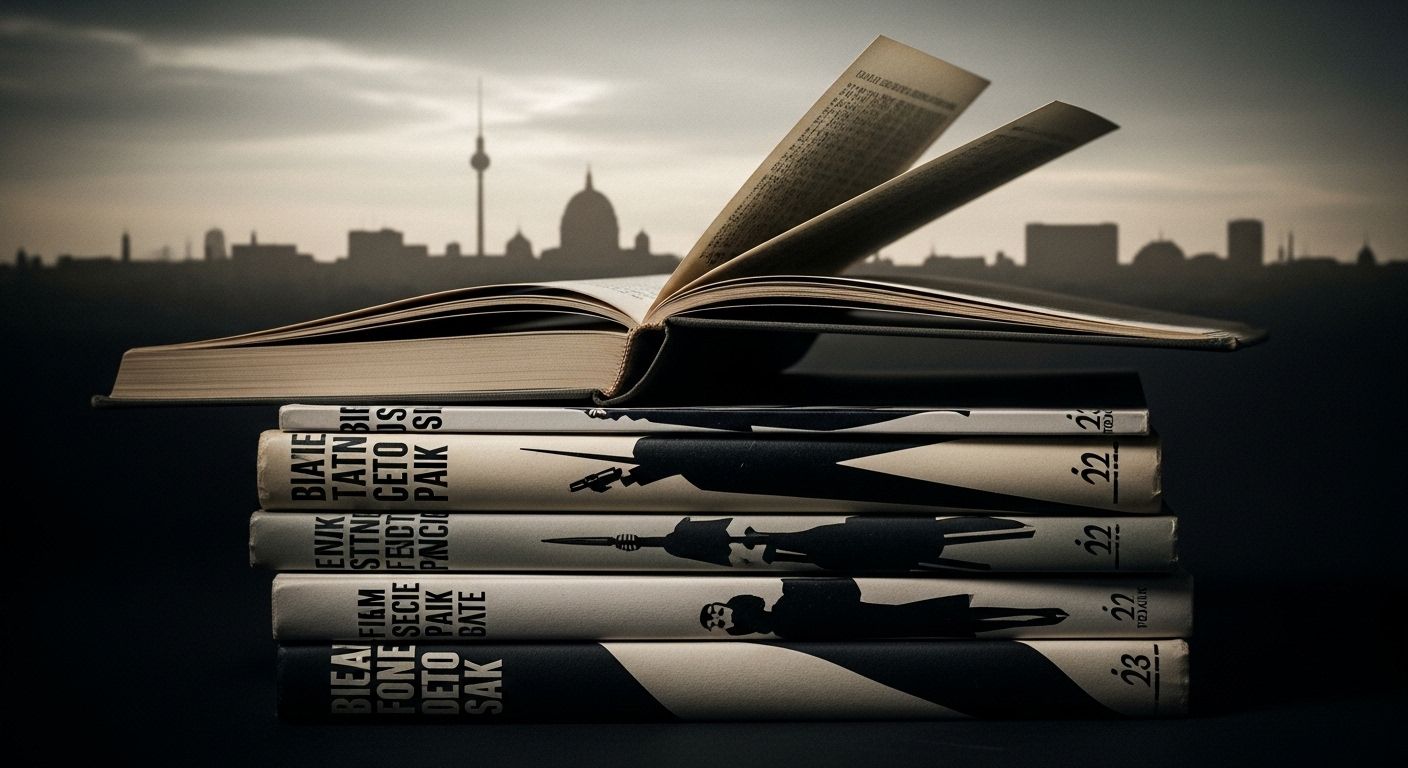
The Invisible Man Book Ralph Ellison Classic
- 1.
Ever Felt Seen But Never Noticed?
- 2.
Invisibility as Social Condition, Not Superpower
- 3.
Jazz, Chaos, and the Rhythm of Resistance
- 4.
From Southern Boy to Harlem Prophet: A Journey Through Masks
- 5.
Symbols That Cut Deeper Than Any Knife
- 6.
Brotherhoods, Betrayals, and the Cost of Being Used
- 7.
Humor as Armor, Satire as Weapon
- 8.
A Literary Earthquake That Still Shakes Shelves
- 9.
Why Gen Z Is Rediscovering Ellison Underground
- 10.
Reading It Right: Tips, Context, and Where to Go Next
Table of Contents
the invisible man book ralph ellison
Ever Felt Seen But Never Noticed?
Y’all ever walked into a room fulla people and still felt like a ghost? Like your voice echoes but never lands, your presence acknowledged only when it’s convenient? That’s the heartbeat of the invisible man book ralph ellison—not about cloaks or sci-fi tricks, but about bein’ rendered invisible by a world that refuses to see you as whole. Published in 1952 and still cuttin’ deep like a fresh razor, this novel ain’t just literature; it’s a mirror held up to America’s soul, smudged with hypocrisy, jazz, and righteous rage. And honey, it’s as relevant today as it was when Truman was in office—maybe even more so.
Invisibility as Social Condition, Not Superpower
Let’s get one thing straight: Ralph Ellison’s the invisible man book ralph ellison ain’t about H.G. Wells. No lab accidents here—just the brutal, everyday erasure of Black identity in a society obsessed with labels but allergic to truth. The narrator? He’s “invisible” not because he’s unseen, but because folks see what they *want* to see: a stereotype, a threat, a mascot, a token—but never a man. This invisibility is systemic, psychological, and deeply American. As Ellison wrote, “I am invisible, understand, simply because people refuse to see me.” And that line? It still slaps harder than a Harlem winter wind.
Jazz, Chaos, and the Rhythm of Resistance
Open the invisible man book ralph ellison and you don’t just read—it *swings*. Ellison weaves bebop cadence into prose, letting chaos and improvisation mirror the fractured reality of Black life in mid-century America. One minute you’re at a surreal battle royal, the next you’re lost in a basement lit by 1,369 lightbulbs stolen from the power company. The narrative doesn’t march—it dances, stumbles, solos. That’s the genius of the invisible man book ralph ellison: it refuses linear comfort, forcing readers to sit in dissonance until they *feel* the weight of being unseen. It’s not a story you consume—it’s one that consumes you back.
From Southern Boy to Harlem Prophet: A Journey Through Masks
Our narrator starts wide-eyed—a scholarship kid from the South, eager to please white benefactors with his “modesty” and “gratitude.” But each chapter strips away another mask: the obedient student, the loyal Brotherhood member, the angry radical. By the end, he’s underground, literally and spiritually, having learned that every role offered to him was a cage painted gold. In the invisible man book ralph ellison, identity isn’t found—it’s forged in fire, then discarded when it no longer serves truth. And that journey? It’s messy, contradictory, and achingly human—just like real life.
Symbols That Cut Deeper Than Any Knife
Ellison didn’t just write scenes—he built altars. The briefcase handed to the narrator after the battle royal? A gilded trap. The banknote stamped “Keep This N***** Boy Running”? A national motto disguised as charity. Even the paint factory’s “Optic White” (“…enough black dope in it to make it look whiter”) is a blistering metaphor for performative purity. Every object in the invisible man book ralph ellison pulses with double meaning, forcing readers to ask: what are *we* blind to? Below’s a quick look at key symbols and their sting:
| Symbol | Surface Meaning | Deeper Truth in the invisible man book ralph ellison |
|---|---|---|
| 1,369 Lightbulbs | Illicit electricity | Self-illumination in a world that denies your light |
| Sambo Doll | Child’s toy | Reduction of Black men to dancing puppets for white amusement |
| The Briefcase | Professional tool | Container of false promises and borrowed identities |
Brotherhoods, Betrayals, and the Cost of Being Used
When the narrator joins “The Brotherhood,” he thinks he’s found purpose. Turns out, he’s just a pawn in someone else’s revolution. Sound familiar? the invisible man book ralph ellison exposes how even progressive movements can tokenize Black voices—demanding labor but denying leadership, using pain as propaganda while ignoring personhood. The betrayal isn’t just personal; it’s ideological. And Ellison, bless his soul, doesn’t let anyone off the hook—not racists, not liberals, not revolutionaries. Invisibility, he argues, is the price of being useful but never *valued*.
Humor as Armor, Satire as Weapon
Don’t let the heavy themes fool you—the invisible man book ralph ellison is *funny*. Darkly, absurdly, brilliantly funny. From the pompous Dr. Bledsoe to the ranting Ras the Exhorter, Ellison skewers egos with surgical wit. That funeral where the crowd mistakes the narrator for Reverend Barbee? Pure comedic gold wrapped in tragedy. This humor isn’t escape—it’s survival. It’s the chuckle you let out when the world’s so ridiculous, crying would be redundant. And in the invisible man book ralph ellison, laughter is both shield and scalpel.
A Literary Earthquake That Still Shakes Shelves
When the invisible man book ralph ellison dropped in 1952, it didn’t just win the National Book Award—it rewrote the rules. Critics called it “dazzling,” “chaotic,” “necessary.” Over 70 years later, it’s taught in high schools, dissected in PhD theses, and cited by activists from Ta-Nehisi Coates to Ava DuVernay. Sales remain steady—over 2 million copies printed in English alone—and its influence echoes in works like Between the World and Me and The Sellout. Simply put, the invisible man book ralph ellison isn’t just a classic; it’s a cornerstone.
Why Gen Z Is Rediscovering Ellison Underground
Scroll TikTok long enough and you’ll find teens quoting “I am an invisible man” over lo-fi beats. Why? Because Ellison’s themes—identity, performativity, systemic erasure—resonate in the age of algorithms and curated personas. When your worth is measured in likes, isn’t everyone a little invisible? Young readers connect with the narrator’s search for authenticity in a world demanding masks. And thanks to BookTok and #ClassicsClub, the invisible man book ralph ellison is surging again—not as dusty canon, but as living, breathing truth. As one 19-year-old put it: “Ellison didn’t predict the internet. He predicted *us*.”
Reading It Right: Tips, Context, and Where to Go Next
Approach the invisible man book ralph ellison like you would a live wire—respectful, curious, ready to feel the current. Give yourself time; it’s dense, allusive, and demands re-reading. Listen to Duke Ellington while you read. Look up the references (Frederick Douglass, Booker T. Washington, Marx). And don’t skip the prologue or epilogue—they’re the keys to the whole damn kingdom. On average, it takes 10–12 hours to read (about 581 pages), but the digestion? That lasts a lifetime. Ready to dive deeper? Start at Slow Studies for context-rich guides. Explore our full archive in Books, or pair this with our analysis of historical fiction turned film: The Giver of Stars Movie Adaptation. Because once you see the invisible, you can’t unsee it—and you shouldn’t want to.
Frequently Asked Questions
What is The Invisible Man by Ralph Ellison about?
The Invisible Man by Ralph Ellison follows an unnamed Black narrator’s journey from the segregated South to Harlem, exploring how systemic racism renders him “invisible”—not physically unseen, but socially and psychologically ignored. Through surreal episodes, political disillusionment, and personal awakening, the invisible man book ralph ellison examines identity, ideology, and the struggle for self-definition in a society that refuses to see Black humanity.
Is The Invisible Man worth reading?
Absolutely. the invisible man book ralph ellison is not just worth reading—it’s essential. Its blend of lyrical prose, biting satire, and profound social critique offers insights into race, power, and identity that remain startlingly relevant. While challenging, its rewards are immense: readers gain not just a story, but a lens through which to see hidden structures of erasure in modern life.
Is Invisible Man a classic book?
Yes—Invisible Man is widely regarded as one of the greatest American novels of the 20th century. It won the National Book Award in 1953 and has been continuously in print since its publication. Scholars, writers, and educators consistently place the invisible man book ralph ellison alongside works by Faulkner, Morrison, and Baldwin as foundational to understanding American literature and racial consciousness.
How long does it take to read Invisible Man by Ralph Ellison?
At an average reading pace of 250 words per minute, Invisible Man (approximately 155,000 words) takes about 10–12 hours to read. However, due to its dense symbolism, historical references, and philosophical depth, many readers choose to read it slowly—over days or weeks—to fully absorb the invisible man book ralph ellison’s layered meanings and emotional impact.
References
- https://www.nytimes.com/2022/04/01/books/review/ralph-ellison-invisible-man-legacy.html
- https://www.britannica.com/topic/Invisible-Man-novel-by-Ellison
- https://www.penguinrandomhouse.com/books/13130/invisible-man-by-ralph-ellison/
- https://www.npr.org/2021/03/01/972345678/why-ralph-ellisons-invisible-man-still-matters