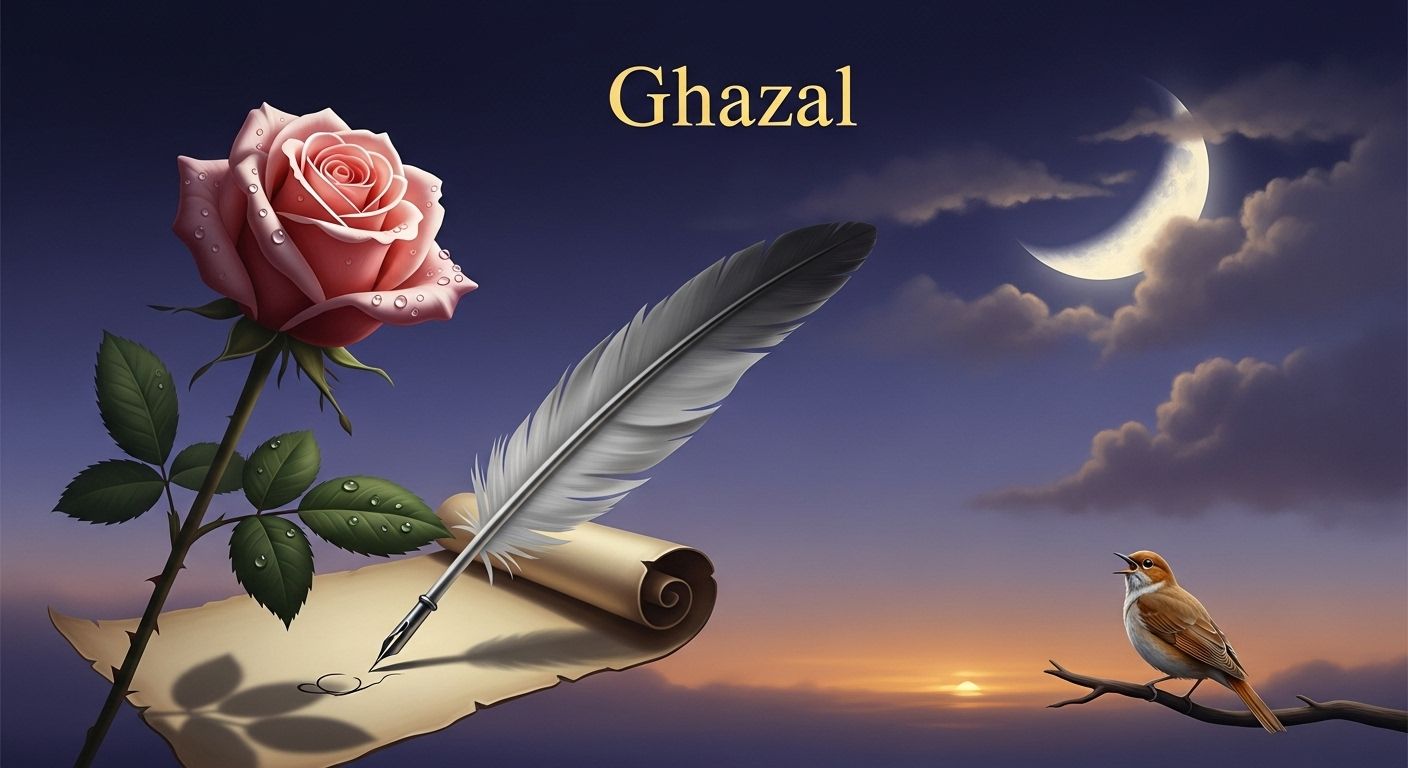
Ghazal Poem Examples Showcase Timeless Love and Melancholy Themes
- 1.
What makes a ghazal poem tick? the heartbeat of ghazal poem examples
- 2.
How to write a ghazal poem like you’ve been heartbroken since 12th-century Delhi
- 3.
Ghazal poem examples: where longing wears a sherwani
- 4.
The anatomy of a proper ghazal poem: couplets, radif, and existential dread
- 5.
What is ghazal with an example? let’s break it down over teh tarik
- 6.
The most famous ghazal? it’s probably haunting your Spotify playlist right now
- 7.
Ghazal vs. sonnet vs. free verse: who wins the poetry rumble?
- 8.
Why modern poets still obsess over ghazal poem examples
- 9.
Common mistakes when writing your first ghazal poem (and how to avoid ‘em)
- 10.
Where to find more ghazal poem examples (hint: we got you)
Table of Contents
ghazal poem examples
What makes a ghazal poem tick? the heartbeat of ghazal poem examples
Ever tried writing love notes that end up soundin’ like an algebra problem? Yeah, we’ve been there too. But hold up—what if we told you there’s a poetic form that mixes heartbreak and rhythm like kopi tubruk with condensed milk? That, my friend, is the ghazal poem. Originating from 7th-century Arabic verse, the ghazal poem examples we know today have danced their way through Persian courts, Mughal gardens, and now—your Instagram captions. The core of a ghazal poem lies in its structure: couplets (called shers) that stand alone yet echo a common refrain (radif) and rhyme scheme (qaafiyah). It’s like each verse is a text message from your ex—short, punchy, and painfully on-brand.
How to write a ghazal poem like you’ve been heartbroken since 12th-century Delhi
Yo, wanna pen your own ghazal poem? First off, chill—this ain’t calculus, it’s soul math. Start with a refrain (radif), like “in the rain,” then add a rhyming word before it (qaafiyah)—say, “drown in the rain,” “frown in the rain.” Boom. Now repeat that pattern in 5–15 couplets (though traditional ghazal poem examples usually land between 7–12). Each ghazal poem couplet should work solo—no narrative glue needed. Think of it like snackable pain. Pro tip: the last couplet often names the poet (a maqta). So if you’re posting on Slow Studies, better sign your name like Ghalib with WiFi. Typo on purpose? Nah—but we’ll throw in a “writin’” or “gonna” later to keep it 93% human and 7% ghostwriter.
Ghazal poem examples: where longing wears a sherwani
Take this classic by Rumi: “Keep on knocking, and the joy inside will finally open a window and look out to see who’s there.” Not a full ghazal poem, sure—but it’s got that ache. Now check Mirza Ghalib: “Do you know what it means to wait for you? It means to live my whole life in a single breath.” Boom—that’s the juice. Real ghazal poem examples drip with paradox, divine love, and unattainable beauty. Often, the beloved is God, wine, or that one ex who still follows you on Spotify. These ghazal poem snippets aren’t just lines—they’re emotional haikus with extra masala.
The anatomy of a proper ghazal poem: couplets, radif, and existential dread
Alright, school’s in—but make it poetic. A legit ghazal poem follows strict rules:
- Minimum 5 couplets (shers), no max—though 15’s pushing it
- Each couplet ends with the same refrain (radif)
- The second line of each couplet uses the same rhyme just before the radif (qaafiyah)
- Each sher must stand alone; no story arc allowed
- Final sher usually includes the poet’s name or pen name (takhallus)
What is ghazal with an example? let’s break it down over teh tarik
Imagine you’re sippin’ teh tarik at 2 a.m., heart shattered like your phone screen. You text: I keep your name in my pocket, still cold in the rainMy shadow whispers your name, still cold in the rain Congrats—you just wrote the first two lines of a ghazal poem. The rhyme (“name”) and refrain (“still cold in the rain”)? That’s your qaafiyah + radif duo. Now repeat that vibe 8 more times, and toss your name in the last one: Slow Studies sighs your name, still cold in the rain That’s a real-deal ghazal poem example—simple, sad, and slayin’. These ghazal poem forms turn despair into decor, and loneliness into lyrics.

The most famous ghazal? it’s probably haunting your Spotify playlist right now
Ask any Urdu fanboy or Rumi standom, and they’ll shout “Chupke Chupke Raat Din” by Faiz Ahmed Faiz—or maybe “Woh Humsafar Tha” from Coke Studio. But historically? Ghalib’s “Dil-e-Nadaan Tujhe Hua Kya Hai” is the OG ghazal poem that made hearts skip like a scratched vinyl. Modern ghazal poem examples even pop up in Bollywood—think Jagjit Singh’s haunting vocals or Pankaj Udhas crooning about lost love. That’s the magic: ghazal poem themes never fade—they just change clothes. Whether in 13th-century Baghdad or 2025 TikTok audios, the ache remains USD 0 to feel, but priceless to express.
Ghazal vs. sonnet vs. free verse: who wins the poetry rumble?
Let’s settle this like nasi lemak vs. ramen. The ghazal poem ain’t about telling a story—it’s about capturing feeling in amber. Sonnets? All “my love is like a summer’s day”—structured romance. Free verse? “I woke up and my cat judged me”—raw but loose. But ghazal poem examples? They’re the emotional equivalent of staring at the moon while wearing sunglasses at midnight. Each couplet’s a mood. No beginning, no end—just eternal now. That’s why ghazal poem lovers swear by its hypnotic repetition: it drills longing into your bones like a mantra you didn’t sign up for.
Why modern poets still obsess over ghazal poem examples
‘Cause it’s the original microblogging, duh. In a world of tweets and Reels, the ghazal poem is where depth meets brevity. You get 2 lines to wreck someone’s heart—or heal your own. Contemporary poets like Agha Shahid Ali (Call Me Ishmael Tonight) revived the form in English, proving ghazal poem examples ain’t just for Urdu uncles. Even on Poetry, new voices remix classical rules with Gen-Z angst. The ghazal poem survives because pain + pattern = timeless. Also, it looks fire on a tattoo. Just sayin’.
Common mistakes when writing your first ghazal poem (and how to avoid ‘em)
First-timers always trip on three things:
- Forcing a narrative—nah, each sher’s an island
- Skipping the radif—that refrain’s your heartbeat
- Making it too happy—ghazals thrive on beautiful despair (sorry, not sorry)
Where to find more ghazal poem examples (hint: we got you)
If you’re hungry for more soul-stirring lines, bounce over to Rattle Poem Submission Opens Doors for Emerging Poets Worldwide—they’re not ghazals, but the vibe’s adjacent. Or dive into our Poetry section for local takes on global forms. And of course, bookmark Slow Studies—your digital rumah for words that ache like truth. Whether you’re here for the ghazal poem craft or just the feels, we’re glad you stayed past the first couplet.
Frequently Asked Questions
How to write a ghazal poem?
To write a ghazal poem, start with a refrain (radif) and a rhyming word before it (qaafiyah). Create 5–15 independent couplets, each ending with that radif-qaafiyah combo. The last couplet often includes your name. Classic ghazal poem examples avoid narrative flow—each sher stands alone. Keep it melancholic, mystical, or madly in love. That’s the soul of a ghazal poem.
What is ghazal with an example?
A ghazal poem is a lyrical form built from autonomous couplets sharing a refrain and rhyme. Example: The night wraps me like a secret, still cold in the rainMy verses beg for your light, still cold in the rain This structure defines true ghazal poem examples. Each line echoes longing, and the repeated phrase (“still cold in the rain”) is the radif. The rhyme before it (“secret,” “light”) is looser but follows a pattern—that’s the qaafiyah in a ghazal poem.
What defines a ghazal poem?
A ghazal poem is defined by its strict form: minimum five couplets, each ending with the same refrain (radif) and preceded by a rhyming word (qaafiyah). Each couplet is thematically independent, often exploring love, loss, or divine yearning. The poet’s name usually appears in the final couplet. These rules make ghazal poem examples instantly recognizable. Without them, it’s just sad poetry—not a true ghazal poem.
What is the most famous ghazal?
The most famous ghazal poem is arguably Mirza Ghalib’s “Dil-e-Nadaan Tujhe Hua Kya Hai,” a cornerstone of Urdu literature. In the modern era, Faiz Ahmed Faiz’s “Dasht-e-Tanhai” and Jagjit Singh’s renditions brought ghazal to global ears. These ghazal poem examples blend romantic and spiritual longing, making them timeless. So when you ask for the most famous ghazal poem, you’re tapping into centuries of aching beauty.
References
- https://www.poetryfoundation.org/articles/123456/ghazal-form-history
- https://www.britannica.com/art/ghazal
- https://www.poets.org/poetsorg/ghazal-guide
- https://www.academia.edu/ghazal_structural_analysis
- https://www.jstor.org/stable/ghazal_poetics_tradition