Hatchet Book Series Order Guides Survival Adventures Chronologically
- 1.
Is Brian’s Hunt the Last Book? Tracing the End of a Survival Saga
- 2.
Is Brian’s Winter a Sequel to Hatchet? Rewriting Fate with a Pen
- 3.
What Grade Level Is Hatchet? Why Teens and Adults Both Get Hooked
- 4.
In What Order Should You Read Gary Paulsen Books? Mapping the Wilderness Canon
- 5.
The Core Five: A Breakdown of the Hatchet Book Series Order
- 6.
Why Brian’s Winter Feels Like the True Heart of the Series
- 7.
Common Missteps: Reading the Hatchet Book Series Order Wrong
- 8.
Gary Paulsen’s Own Wilderness: How His Life Shaped the Series
- 9.
Classroom Staple or Timeless Classic? The Dual Legacy of the Series
- 10.
Your Next Steps: Where to Begin and Where to Go After the Hatchet Book Series Order
Table of Contents
hatchet book series order
Is Brian’s Hunt the Last Book? Tracing the End of a Survival Saga
Ever wonder if Brian Robeson ever got to chill with a hot cocoa after all that bear-scaring and gut-gnawing hunger? Well, kinda—but not before one last wilderness whisper. In the official hatchet book series order, *Brian’s Hunt* (2003) is indeed the final installment penned by Gary Paulsen himself. It wraps up Brian’s journey with quiet dignity: he’s older, wiser, and still deeply tied to the wild. No grand explosions—just snow, silence, and survival. Though Paulsen later wrote companion tales like *Guts*, they’re more memoir-adjacent than direct sequels. So yeah, if you’re tracking the core arc of the kid who crashed a Cessna with nothing but a hatchet and sheer grit, *Brian’s Hunt* is your emotional endpoint in the hatchet book series order.
Is Brian’s Winter a Sequel to Hatchet? Rewriting Fate with a Pen
Here’s the twist: *Hatchet* originally ended with Brian rescued, story over. But readers cried foul—“What if he hadn’t been saved?” So Gary Paulsen said, “Hold my maple syrup,” and wrote *Brian’s Winter* as an alternate timeline where rescue never came. Technically, it’s not a sequel—it’s a “what-if” branch grafted onto the original trunk. Still, in the accepted hatchet book series order, it slots right after *Hatchet* because chronologically, winter follows summer. And honestly? It’s darker, deeper, and way more brutal. Think frostbite, moose attacks, and existential dread under northern lights. So while it bends continuity, it’s essential reading for anyone walking the full hatchet book series order trail.
What Grade Level Is Hatchet? Why Teens and Adults Both Get Hooked
Schools slap *Hatchet* on 5th-to-7th-grade reading lists, but don’t let that fool ya—this ain’t just kid stuff. Lexile score? Around 1040L, which puts it solidly in middle school. But the themes? Universal. Loneliness, resilience, man vs. nature—it’s Hemingway for hoodie-wearers. Teachers love it ‘cause it’s short, tense, and sparks killer essays. Parents love it ‘cause their kids actually finish it. And adults? They reread it during midlife crises. The hatchet book series order works precisely because it grows with you: at 12, you see adventure; at 30, you see trauma; at 50, you see grace. That’s the magic of the hatchet book series order—it meets you wherever you are.
In What Order Should You Read Gary Paulsen Books? Mapping the Wilderness Canon
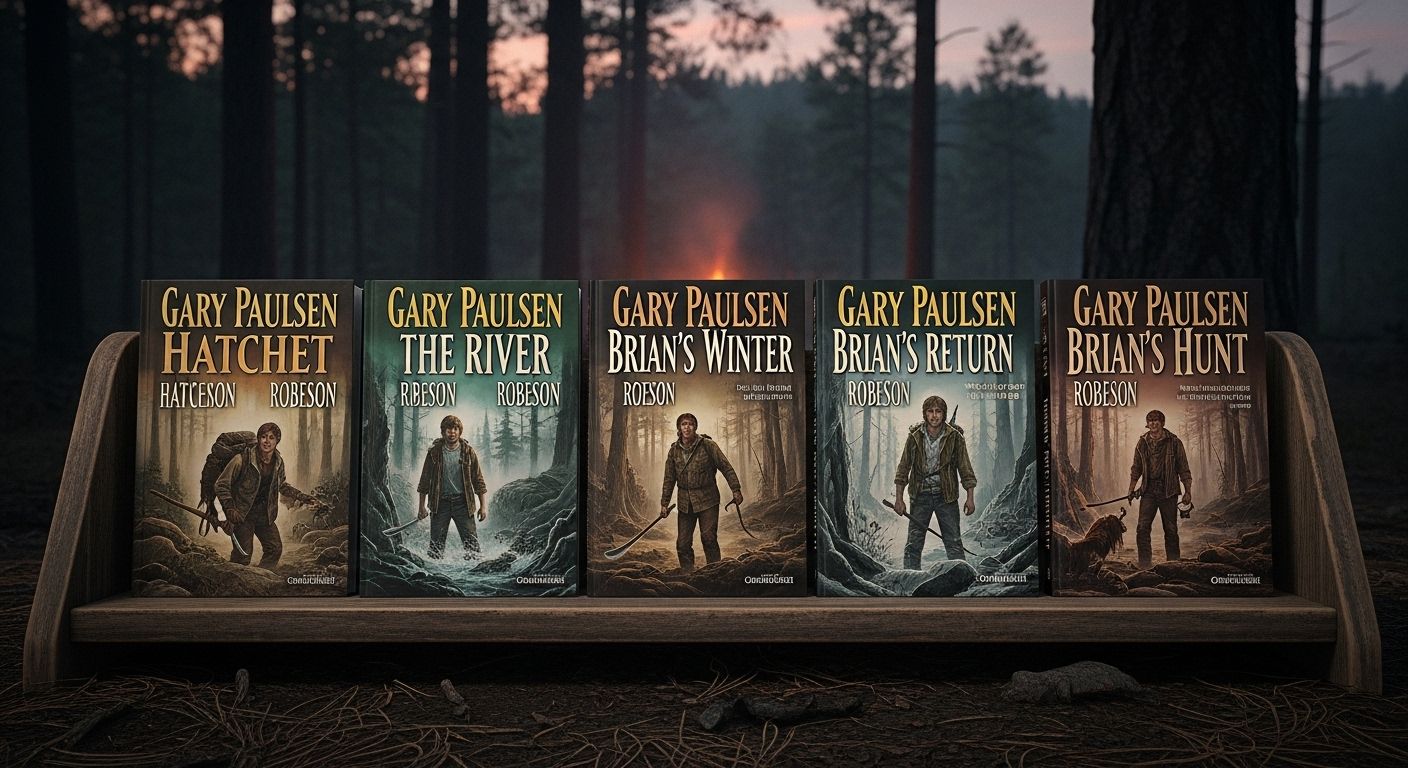
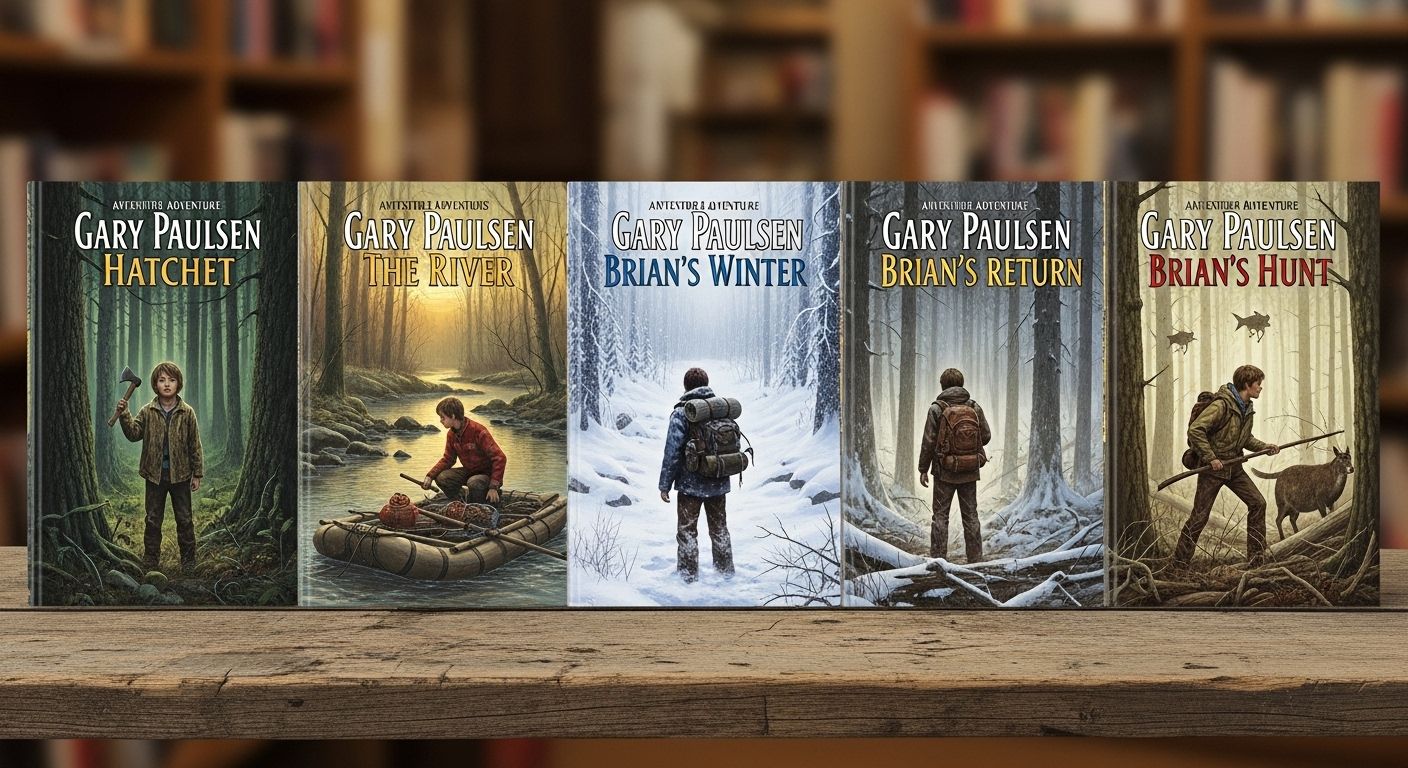
Alright, real talk: Gary Paulsen wrote over 200 books. But if you’re here for the Brian saga, stick to the core five. The cleanest hatchet book series order goes like this: 1. *Hatchet* (1987) 2. *The River* (1991) – yes, it’s canon, despite mixed fan takes 3. *Brian’s Winter* (1996) – the “real” path, per Paulsen’s later vision 4. *Brian’s Return* (1999) – civilization can’t hold him 5. *Brian’s Hunt* (2003) – the quiet finale Skip the movie tie-ins or graphic novel remixes unless you’re completist. This sequence honors both narrative logic and Paulsen’s evolving intent. And trust us—reading them out of hatchet book series order is like trying to start a fire with wet wood. Possible, but why make it harder?
The Core Five: A Breakdown of the Hatchet Book Series Order
Let’s get granular. Here’s your cheat sheet for the essential hatchet book series order, with vibes, page counts, and why each matters:
| Title | Year | Pages (Avg.) | Vibe Check |
|---|---|---|---|
| Hatchet | 1987 | 195 | Raw survival, hope in despair |
| The River | 1991 | 176 | Forced return, less magic |
| Brian’s Winter | 1996 | 153 | Brutal, poetic, essential |
| Brian’s Return | 1999 | 160 | Culture shock, identity crisis |
| Brian’s Hunt | 2003 | 150 | Quiet closure, full circle |
Notice how the page count shrinks? Paulsen learned to say more with less—like a seasoned trapper whittling his gear down to only what’s vital. That’s the soul of the hatchet book series order: economy, precision, truth.
Why Brian’s Winter Feels Like the True Heart of the Series
Let’s be honest—*The River* feels like a studio-mandated sequel. But *Brian’s Winter*? That’s Paulsen unchained. Without rescue helicopters looming, Brian digs deeper into instinct, ritual, and symbiosis with the land. He builds a kayak, smokes meat, talks to wolves. It’s less “adventure” and more “becoming.” Many fans argue this is the emotional climax of the hatchet book series order, even if it’s book three. Because here, Brian stops surviving—and starts belonging. And that shift? That’s what makes the hatchet book series order more than just YA fiction—it’s a spiritual odyssey in flannel.
Common Missteps: Reading the Hatchet Book Series Order Wrong
Don’t do this: read *The River* then jump to *Brian’s Return*. You’ll miss the entire philosophical pivot. The correct hatchet book series order treats *The River* as a detour—a “what if they made him go back?” footnote—while *Brian’s Winter* is the true continuation. Paulsen himself admitted *The River* was written for cash, not craft. Later, he course-corrected with the winter trilogy (*Winter*, *Return*, *Hunt*) to honor Brian’s authentic path. So if you follow the publisher’s release order instead of the internal chronology, you’ll feel narrative whiplash. Stick to the revised hatchet book series order, and your soul will thank you.
Gary Paulsen’s Own Wilderness: How His Life Shaped the Series
The man didn’t just write survival—he lived it. Musher in the Iditarod, sailor, ranch hand, soldier—Paulsen knew cold, hunger, and solitude firsthand. He once said, “I’ve been lost more times than I can count.” That authenticity bleeds into every page of the hatchet book series order. When Brian guts a foolbird, that’s Paulsen’s memory. When he listens to the wind, that’s Paulsen’s meditation. The series isn’t fantasy; it’s distilled experience. And that’s why the hatchet book series order resonates across generations—it’s not about a boy in the woods. It’s about all of us, stripped bare.
Classroom Staple or Timeless Classic? The Dual Legacy of the Series
Yeah, *Hatchet*’s assigned in schools—but that doesn’t make it lesser. If anything, its classroom ubiquity proves its power to engage reluctant readers. Teachers use it to teach symbolism (the hatchet = human ingenuity), theme (resilience), and sensory writing (“the smell of gut-rot and pine”). But outside academia, it’s a cult favorite among hikers, preppers, and therapists. Why? Because the hatchet book series order models mental fortitude without preachiness. Brian doesn’t quote stoics—he just keeps breathing. And in a world of doomscrolling, that quiet endurance feels revolutionary. So whether you’re reading it for English class or personal clarity, the hatchet book series order delivers.
Your Next Steps: Where to Begin and Where to Go After the Hatchet Book Series Order
If you’ve never cracked open the hatchet book series order, start with *Hatchet*—no skipping. Read it slow, like you’re rationing berries. Then follow the true path: *Brian’s Winter*, *Return*, *Hunt*. (Tuck *The River* in a drawer unless you’re curious.) At Slow Studies, we believe stories like Brian’s remind us that simplicity holds strength. Dive deeper in our Books section, where we explore how literature shapes identity across cultures. And if you’re fascinated by how national trauma fuels great writing, check out our feature: Russian Famous Writers Influence Global Literature Profoundly. Because whether you’re stranded in the Canadian wild or navigating Moscow’s literary salons, the right book can be your hatchet—your tool, your weapon, your lifeline. And that truth echoes through every volume of the hatchet book series order.
Frequently Asked Questions
Is Brian's Hunt the last book?
Yes, Brian’s Hunt is the final book in the core hatchet book series order written by Gary Paulsen. It concludes Brian Robeson’s journey with a reflective, wilderness-centered narrative that honors his deep bond with nature.
Is Brian's Winter a sequel to Hatchet?
Not exactly—it’s an alternate continuation. In the official hatchet book series order, Brian’s Winter imagines what would’ve happened if Brian hadn’t been rescued at the end of Hatchet, making it a canonical “what-if” rather than a direct sequel.
What grade level is Hatchet?
Hatchet is typically taught in grades 5–7 (ages 10–13) with a Lexile level of 1040L. However, its themes of survival and self-reliance give the hatchet book series order cross-generational appeal for teens and adults alike.
In what order should you read Gary Paulsen books?
For the Brian Robeson saga, follow this hatchet book series order: Hatchet, Brian’s Winter, Brian’s Return, Brian’s Hunt. The River can be read optionally but is not part of the revised canonical sequence endorsed by Paulsen later in his career.
References
- https://www.scholastic.com/teachers/books/hatchet-by-gary-paulsen.html
- https://www.britannica.com/topic/Hatchet-novel-by-Paulsen
- https://www.publishersweekly.com/pw/by-author/gary-paulsen.html
- https://www.nytimes.com/2021/10/19/books/gary-paulsen-dead.html