Literary Elements and Examples Unlock Secrets of Great Stories
- 1.
What Are Literary Elements and Why Do They Matter in Every Story Ever Told?
- 2.
Plot: The Spine of Any Narrative—Where’s the Drama At?
- 3.
Character: Who’s the Real MVP—Protagonist, Antagonist, or That Weird Sidekick?
- 4.
Setting: Not Just Background—It’s Mood, Culture, and Vibe All Rolled Into One
- 5.
Point of View: Whose Eyes Are We Peeking Through Anyway?
- 6.
Theme: The “Why Are We Even Here?” of a Story
- 7.
Conflict: Because Peaceful Stories Are Boring as Watching Paint Dry
- 8.
Tone and Mood: Don’t Mix ‘Em Up, Cuz They’re NOT the Same
- 9.
Symbolism and Imagery: When a Rose Isn’t Just a Rose
- 10.
Figurative Language: Spice Up Your Prose Like You’re Cooking Rendang
Table of Contents
literary elements and examples
What Are Literary Elements and Why Do They Matter in Every Story Ever Told?
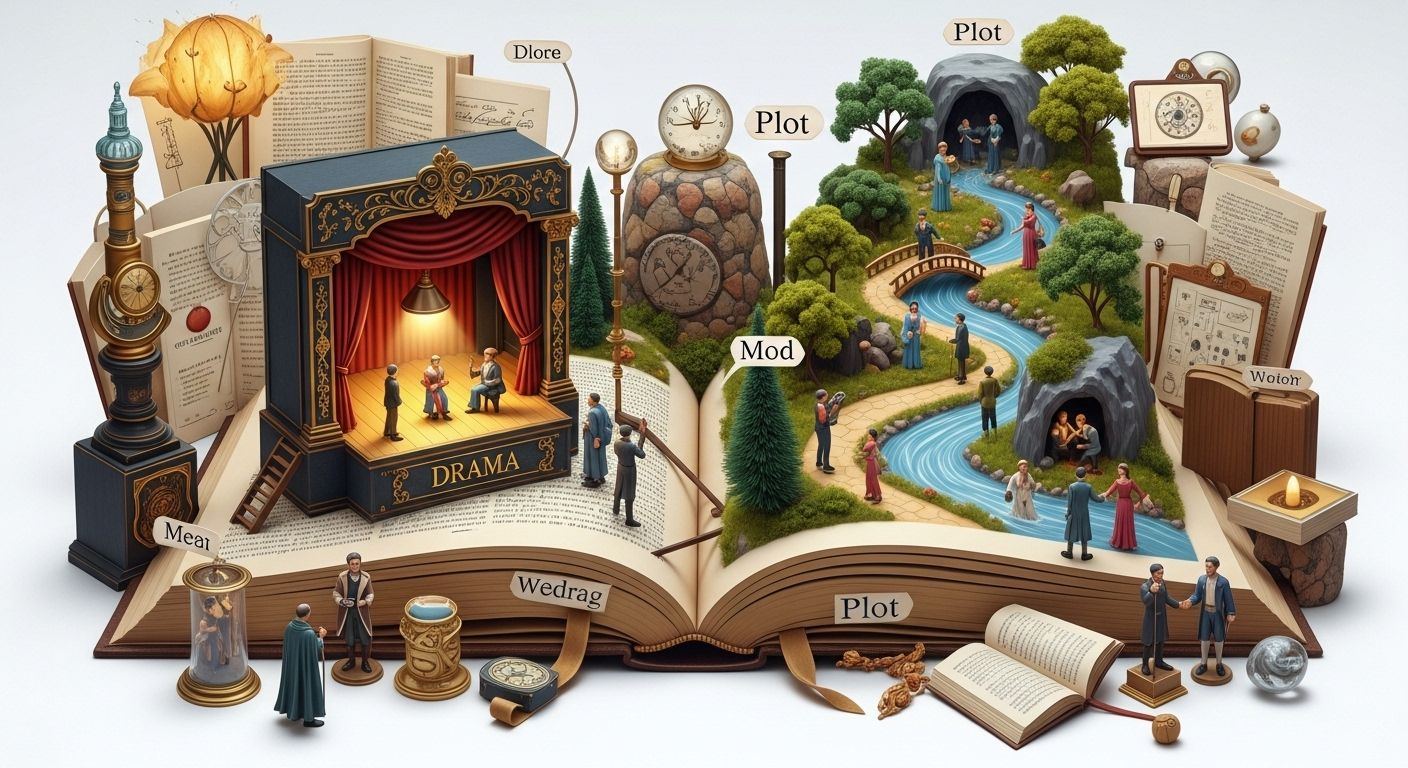
Ever read a book that just stuck to your soul like nasi liwet on a rainy Sunday? Nah, that’s not magic—it’s literary elements and examples doin’ their subtle but mighty work behind the scenes. These ain’t just fancy terms teachers scribble on whiteboards; they’re the DNA of storytelling, yo! From Shakespeare to Sapardi, from Hemingway to Harry Potter—every masterpiece runs on literary elements and examples. Without ‘em, stories would be flatter than pancake on a sad Tuesday morning.
Plot: The Spine of Any Narrative—Where’s the Drama At?
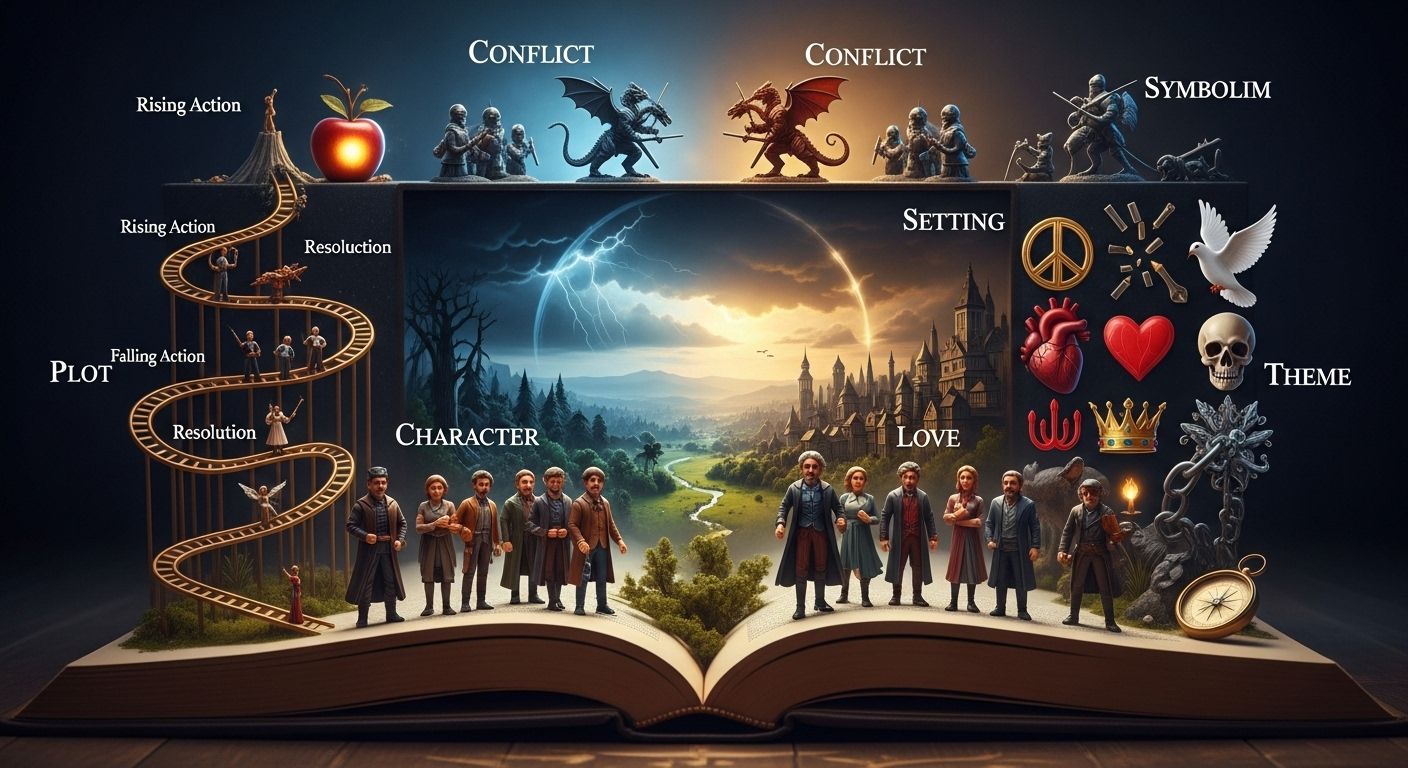
Plot’s basically the skeleton that holds your story upright. Think of it as the GPS of a tale—“turn left at betrayal, straight through redemption alley.” You can’t tell a story without a sequence, and that’s exactly where literary elements and examples like exposition, rising action, climax, falling action, and resolution strut in. Like in "Romeo and Juliet"? The plot’s got more twists than a Surabayan rujak vendor’s hands. That’s literary elements and examples flexin’ hard.
Character: Who’s the Real MVP—Protagonist, Antagonist, or That Weird Sidekick?
Characters are the heartbeats of your tale. They cry, scheme, fall in love with the wrong person (*cough* Edward and Bella *cough*), and sometimes even betray you like your ex who still texts you “u up?” at 2 a.m. Whether it’s dynamic, static, round, or flat—character development is a core pillar of literary elements and examples. Take Jay Gatsby: mysterious, tragic, and rich AF—but still lonely as hell. That’s character depth via literary elements and examples.
Setting: Not Just Background—It’s Mood, Culture, and Vibe All Rolled Into One
Setting ain’t just “oh it happened in Jakarta in 2025.” Nah, bruh—it’s the humidity that makes your shirt stick, the honk of bajaj at 7 a.m., the lingering scent of soto betawi. In literature, setting shapes everything. Dystopian futures feel cold; Victorian mansions echo with secrets. This is where literary elements and examples paint the canvas before the drama even starts. Moby Dick without the ocean? Just a really angry guy in therapy.
Point of View: Whose Eyes Are We Peeking Through Anyway?
First-person, second-person, third-limited, third-omniscient—POV’s like choosing whether to watch a movie through a keyhole or from a helicopter. In "The Great Gatsby", Fitzgerald uses Nick Carraway’s first-person POV to give us insider gossip with a side of moral confusion. That strategic lens? Pure literary elements and examples wizardry. Mess with POV, and you mess with the reader’s trust—so choose wisely, storyteller.
Theme: The “Why Are We Even Here?” of a Story
Theme’s the big idea—the philosophical nachos under all the cheesy plot twists. Love conquers all? Power corrupts? Life’s a series of awkward DMs? Whatever it is, theme ties your tale together like a perfectly tied batik knot. And yes, it’s a cornerstone of literary elements and examples. In "To Kill a Mockingbird", racism and moral growth ain’t just topics—they’re the soul of the story. That’s literary elements and examples speaking truth to fiction.
Conflict: Because Peaceful Stories Are Boring as Watching Paint Dry
No conflict = no story. Periodt. Whether it’s man vs. man (like Batman vs. Joker), man vs. self (Hamlet’s existential crisis), or man vs. society (hello, Hunger Games), tension is what keeps pages turning. These juicy struggles? Classic literary elements and examples. Without Walter White’s inner demon battling his dad-energy, Breaking Bad would’ve just been a chemistry lecture with fancy cinematography.
Tone and Mood: Don’t Mix ‘Em Up, Cuz They’re NOT the Same
Tone is the author’s attitude; mood is how the reader feels. Imagine your tante telling a ghost story—with a smirk (tone) while you’re shivering under your selimut (mood). In Poe’s “The Raven,” the tone’s gloomy and dramatic; the mood? Straight-up goosebumps. This emotional layering? That’s literary elements and examples creating atmosphere without saying a word directly.
Symbolism and Imagery: When a Rose Isn’t Just a Rose
Sometimes a cigar is just a cigar… but in lit? Nah, it’s probably a metaphor for toxic masculinity or colonial power. Symbolism and imagery let writers say 10 things at once. Green light in Gatsby? Hope, longing, the American Dream gone sideways. That’s literary elements and examples operating on stealth mode. And imagery? It’s sensory overload in the best way—“the crimson sun bled into the horizon” hits harder than “it got dark.”
Figurative Language: Spice Up Your Prose Like You’re Cooking Rendang
Similes, metaphors, personification—they’re the bumbu halus of writing. “Her laugh was like wind chimes in a monsoon” > “She laughed.” See the difference? Figurative language transforms bland sentences into flavor bombs. And guess what? It’s a non-negotiable part of literary elements and examples. From Maya Angelou’s “I’ve got oil wells pumping in my living room” to Eminem’s lyrical acrobatics—this stuff sticks because it sings.
Looking for more deep dives? Swing by our Slow Studies homepage, browse the Devices category for more literary tech-talk, or check out our companion piece: example of literary elements story build.
Frequently Asked Questions
What are the 7 literary devices with examples?
The 7 core literary devices include metaphor (“Time is a thief”), simile (“Brave as a lion”), personification (“The wind whispered secrets”), hyperbole (“I’m so hungry I could eat a horse”), alliteration (“Peter Piper picked”), onomatopoeia (“Boom! Crash!”), and irony (“It’s like rain on your wedding day”). These fall under literary elements and examples that shape expressive storytelling.
What are the 10 elements of literature?
The 10 essential elements of literature are plot, character, setting, point of view, theme, conflict, tone, mood, symbolism, and style. Together, they form the backbone of literary elements and examples that make narratives compelling, layered, and unforgettable.
What are the 13 literary terms and examples?
Thirteen common literary terms include allegory, allusion, diction, foreshadowing, imagery, irony, motif, paradox, satire, stream of consciousness, symbolism, theme, and tone. Each contributes uniquely to literary elements and examples, enriching depth and reader engagement across genres.
What are the 14 main literary genres?
The 14 main literary genres are fiction, nonfiction, drama, poetry, fantasy, science fiction, mystery, thriller, romance, historical fiction, horror, biography, autobiography, and young adult (YA). Each genre employs distinct literary elements and examples to meet reader expectations and cultural contexts.
References
- https://www.britannica.com/art/literary-element
- https://literarydevices.net/
- https://www.thoughtco.com/common-literary-elements-4588416
- https://owl.purdue.edu/owl/subject_specific_writing/writing_in_literature/literary_terms.html
- https://www.masterclass.com/articles/literary-devices-list
- https://www.poetryfoundation.org/learn/glossary-terms
- https://www.vocabulary.com/articles/wc/literary-devices-and-terms-list-definition-examples/
- https://www.writingclasses.com/toolbox/tips-master-class/literary-device-examples