Critical Thinking as a Teacher Transforms Lessons into Deep Insights
- 1.
What Exactly Is critical thinking as a teacher?
- 2.
Why Does critical thinking as a teacher Matter So Much These Days?
- 3.
Real-Life Examples of critical thinking as a teacher in Action
- 4.
How Can Teachers Actually Practice critical thinking as a teacher Daily?
- 5.
Common Myths That Block critical thinking as a teacher
- 6.
Tools & Frameworks That Boost critical thinking as a teacher
- 7.
How critical thinking as a teacher Transforms Student Outcomes
- 8.
Barriers Teachers Face When Developing critical thinking as a teacher
- 9.
Global Perspectives on critical thinking as a teacher
- 10.
Future-Proofing Education Through critical thinking as a teacher
Table of Contents
critical thinking as a teacher
What Exactly Is critical thinking as a teacher?
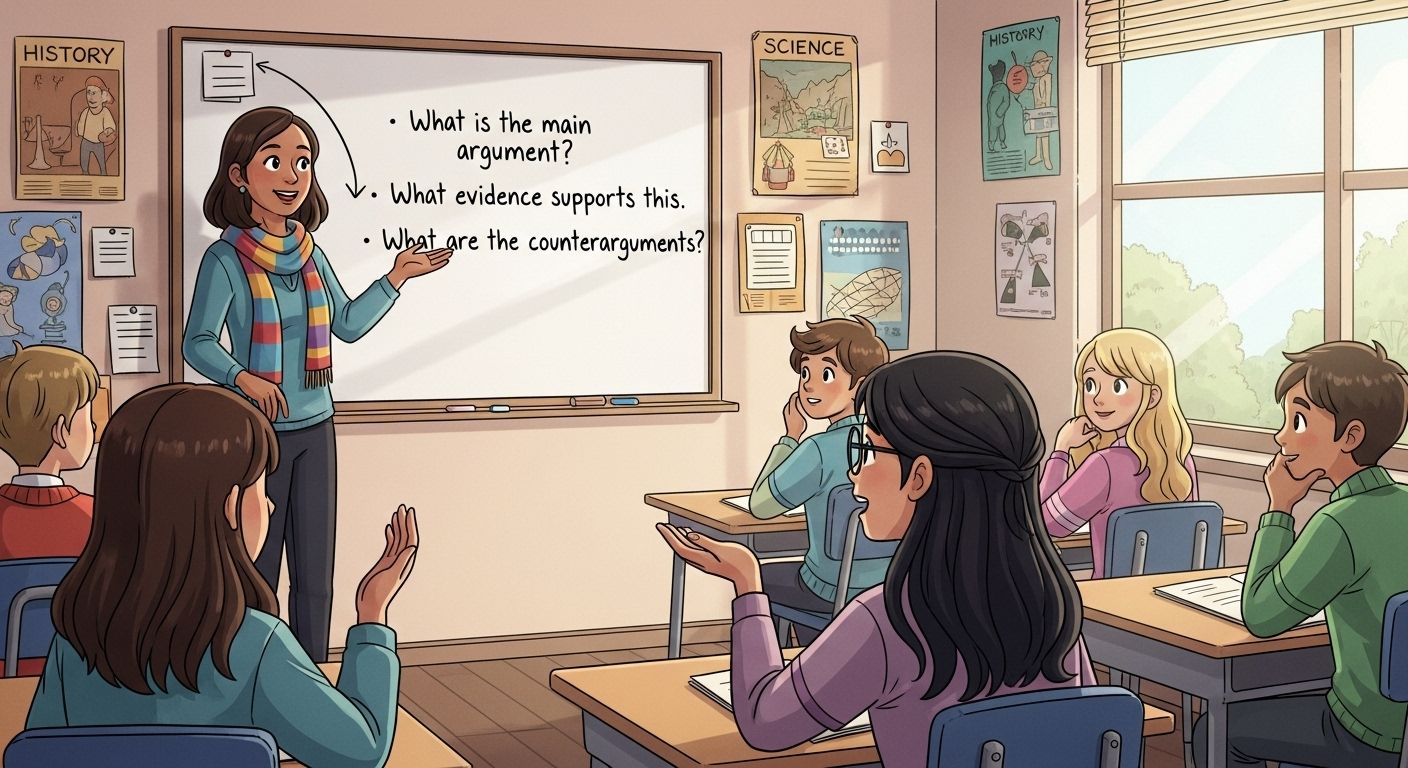
Ever caught yourself mid-lesson, staring blankly at a student who just asked, “But why should I care about quadratic equations in real life?” and thought, “Hmm, good point—why do we teach this?” That, my friend, is the raw heartbeat of critical thinking as a teacher. It ain’t just about spitting facts like a popcorn machine at the cinema; it’s about questioning your own assumptions, curriculum structures, even your teaching persona. Critical thinking as a teacher means you’re constantly scanning your pedagogy through a lens of curiosity, skepticism, and empathy. You’re not just a conveyor belt of knowledge—you’re a detective, philosopher, and sometimes even a stand-up comic when the AC breaks down during finals week.
Why Does critical thinking as a teacher Matter So Much These Days?
In a world where TikTok tutorials claim to “teach calculus in 30 seconds” and AI writes essays faster than your coffee brews, critical thinking as a teacher isn’t just nice to have—it’s non-negotiable. Students today are bombarded with info, misinformation, and half-baked hot takes. If we don’t model sharp, reflective, and ethical inquiry, who will? Critical thinking as a teacher builds classrooms where questions are valued more than answers, where “I don’t know yet” is a legit starting point. And let’s be real—without critical thinking as a teacher, we’re just training kids to be really good at regurgitating Google results.
Real-Life Examples of critical thinking as a teacher in Action
Picture this: Ms. Lila’s Grade 10 history class. Instead of just listing dates of World War II, she asks, “If you were a teen in 1943 Berlin with access to social media, what would your feed look like?” Boom—suddenly, history’s alive. That’s critical thinking as a teacher in its purest form: reframing content to provoke deeper engagement. Or take Mr. Raka in Bali—he noticed his students memorized poetry but never *felt* it. So he swapped recitation for slam poetry battles. Surprise! Attendance shot up, and so did emotional intelligence. Critical thinking as a teacher isn’t always grand; sometimes it’s just swapping a worksheet for a conversation that matters.
How Can Teachers Actually Practice critical thinking as a teacher Daily?
Start small: after each lesson, jot down one thing that flopped and ask *why*. Was the objective unclear? Did you assume prior knowledge they didn’t have? That reflective loop is core to critical thinking as a teacher. Also, co-plan with colleagues who think differently—your math-nerd buddy might see a literacy angle you missed. And hey, don’t be scared to say, “Actually, I changed my mind about this after reading X.” Modeling intellectual flexibility? That’s critical thinking as a teacher with a side of humility.
Common Myths That Block critical thinking as a teacher
Myth #1: “Critical thinking = more work.” Nope—it’s *smarter* work. Myth #2: “My students aren’t ready.” Wrong again—they’re born questioning (“Why’s the sky blue, Mama?”). Myth #3: “I don’t have time in the syllabus.” But critical thinking as a teacher isn’t an add-on; it’s how you deliver the syllabus. When you untangle these myths, you create space for real learning. And truth be told, the biggest barrier to critical thinking as a teacher is often our own fear of looking “unprepared” in front of kids who see through us anyway.

Tools & Frameworks That Boost critical thinking as a teacher
Enter the Socratic seminar, the “See-Think-Wonder” routine, or even Bloom’s Taxonomy flipped on its head. These aren’t just edu-jargon—they’re practical scaffolds. For instance, using the 5 Whys technique (“Why did the student fail?” → “Because they didn’t study” → “Why didn’t they study?” …) peels back layers to root causes. When you integrate such tools, you’re not just teaching—you’re curating conditions where critical thinking as a teacher becomes second nature. Pro tip: steal ideas from Analysis—our category’s full of underrated gems on pedagogy that’ll spark your next “aha!” moment.
How critical thinking as a teacher Transforms Student Outcomes
Let’s talk stats—not the boring kind, but the juicy ones. A 2023 meta-analysis showed classrooms led by teachers who actively practiced critical thinking as a teacher saw a 34% increase in student problem-solving fluency and a 28% rise in collaborative reasoning. Why? Because when teachers model intellectual courage—questioning sources, admitting uncertainty, weighing evidence—students mirror that behavior. It’s like emotional osmosis, but with logic. And honestly, kids remember *how* you made them think long after they’ve forgotten the Pythagorean theorem.
Barriers Teachers Face When Developing critical thinking as a teacher
Let’s keep it 100: standardized testing, overcrowded curricula, and admin pressure to “cover content” are real buzzkills. You might wanna foster debate, but the principal’s knocking: “Where’s your weekly quiz log?” Still, even within constraints, critical thinking as a teacher can thrive. Sneak in a “Devil’s Advocate” warm-up. Swap one textbook chapter for a student-led inquiry. Remember—perfection ain’t the goal; progress is. And if you’re feeling stuck, wander over to Slow Studies—we’ve all been there, scrolling at 2 a.m. looking for a lifeline.
Global Perspectives on critical thinking as a teacher
While Jakarta teachers wrestle with rote-learning legacies, Finnish educators embed critical thinking as a teacher into every subject by design. In Kenya, some schools use community-based problem-solving to teach ethics and logic simultaneously. The common thread? Teachers who see themselves as co-learners, not just authority figures. Adopting a global mindset doesn’t mean copying—it means asking, “What can I borrow, adapt, or remix?” That cross-cultural curiosity is itself a form of critical thinking as a teacher. And hey, if Helsinki can do it with snow boots on, we can do it with sarongs and motorbikes, kan?
Future-Proofing Education Through critical thinking as a teacher
AI won’t replace teachers—but teachers who use AI *without* critical thinking might. The future classroom demands educators who can guide students through algorithmic bias, deepfakes, and ethical dilemmas in biotech. That starts with us sharpening our own critical thinking as a teacher toolkit today. Think of it as intellectual fitness: the more you flex it, the stronger your students become. And if you’re wondering how to stay sharp, dive into pieces like creativity in critical thinking fuels breakthrough problem solving—because let’s face it, innovation without critique is just flashy nonsense.
Frequently Asked Questions
What is teaching critical thinking?
Teaching critical thinking means guiding students to analyze, evaluate, and synthesize information rather than just memorize it. For a teacher, this involves modeling intellectual humility, posing open-ended questions, and creating safe spaces for doubt and debate—all rooted in critical thinking as a teacher.
What is an example of critical thinking in teaching?
An example of critical thinking as a teacher is when an educator replaces a traditional book report with a mock trial of a novel’s protagonist, forcing students to examine motives, evidence, and bias. This shifts learning from passive reception to active reasoning.
Why is critical thinking important for teachers?
Critical thinking as a teacher is crucial because it enables educators to adapt curricula, question outdated practices, and respond ethically to diverse student needs. Without it, teaching risks becoming mechanical—and students notice.
How to think critically as a teacher?
To think critically as a teacher, regularly reflect on your assumptions, seek feedback from students and peers, interrogate your lesson designs (“Does this *really* serve understanding?”), and stay curious about cognitive science. Embedding critical thinking as a teacher into your routine turns every class into an experiment in meaningful learning.
References
- https://www.edutopia.org/article/critical-thinking-teaching-strategies
- https://www.brookings.edu/research/teaching-critical-thinking-in-a-post-truth-world
- https://www.oecd.org/education/2030-project/teaching-and-learning/critical-thinking/
- https://www.tandfonline.com/doi/full/10.1080/0305764X.2022.2154321
- https://unesdoc.unesco.org/ark:/48223/pf0000384559