Russian Famous Writers Influence Global Literature Profoundly
- 1.
Who Exactly Counts as a “Russian Famous Writer” in the Global Imagination?
- 2.
Why Do Russian Famous Writers Keep Showing Up in Western Lit Syllabi?
- 3.
The Big Three: Tolstoy, Dostoevsky, and Chekhov—More Than Just Names on a Coffee Mug
- 4.
Nobel Prizes and Political Exile: The Complicated Legacy of Russian Famous Writers
- 5.
What Is Dostoevsky Most Famous For? Beyond the Brooding Bearded Meme
- 6.
How Female Voices Got Erased from the Canon of Russian Famous Writers
- 7.
From Tsars to TikTok: How Russian Famous Writers Stay Relevant Today
- 8.
Reading Russian Famous Writers in Translation: Lost in Transmission or Gained in Depth?
- 9.
Common Misconceptions About Russian Famous Writers (No, They Weren’t All Depressed Alcoholics)
- 10.
Where to Start If You’re New to Russian Famous Writers (And Where to Go Next)
Table of Contents
russian famous writers
Who Exactly Counts as a “Russian Famous Writer” in the Global Imagination?
Ever wonder why folks from Brooklyn to Brighton keep quoting some bro named Tolstoy like he’s their therapist? Or why your college roommate suddenly got real quiet after reading Crime and Punishment? That, my friend, is the haunting magic of russian famous writers. These ain’t just authors—they’re philosophical ghosts that haunt your late-night thoughts with questions like, “What even is morality?” or “Is suffering necessary for redemption?” The term “russian famous writers” usually refers to a core group of 19th- and early 20th-century literary giants whose works pierced through national borders and became part of the global soul. We’re talkin’ about minds so deep they made existential dread look poetic. And yeah, they wrote mostly in Russian—but thanks to killer translations, their words now live rent-free in English-speaking bookshelves too.
Why Do Russian Famous Writers Keep Showing Up in Western Lit Syllabi?
Let’s be real: if you’ve ever taken a literature class outside Russia, there’s a solid 87% chance you’ve been assigned at least one novel by a russian famous writer. Why? ‘Cause these cats didn’t just tell stories—they dissected the human condition like surgeons with quills. Take Dostoevsky: dude wasn’t just writing about murder; he was probing the moral rot beneath society’s shiny surface. Tolstoy? He turned war and peace into a mirror for every reader’s inner chaos. And Chekhov—man could pack more emotional truth into a short story than most screenwriters do in a whole season. Professors love russian famous writers because their texts are layered like baklava: sweet on the surface, but chewy with philosophy underneath. Plus, let’s not sleep on the fact that Cold War-era academia kinda fetishized Russian depth as the “serious” counterpoint to American optimism. So yeah, russian famous writers became the gold standard for “literary weight.”
The Big Three: Tolstoy, Dostoevsky, and Chekhov—More Than Just Names on a Coffee Mug
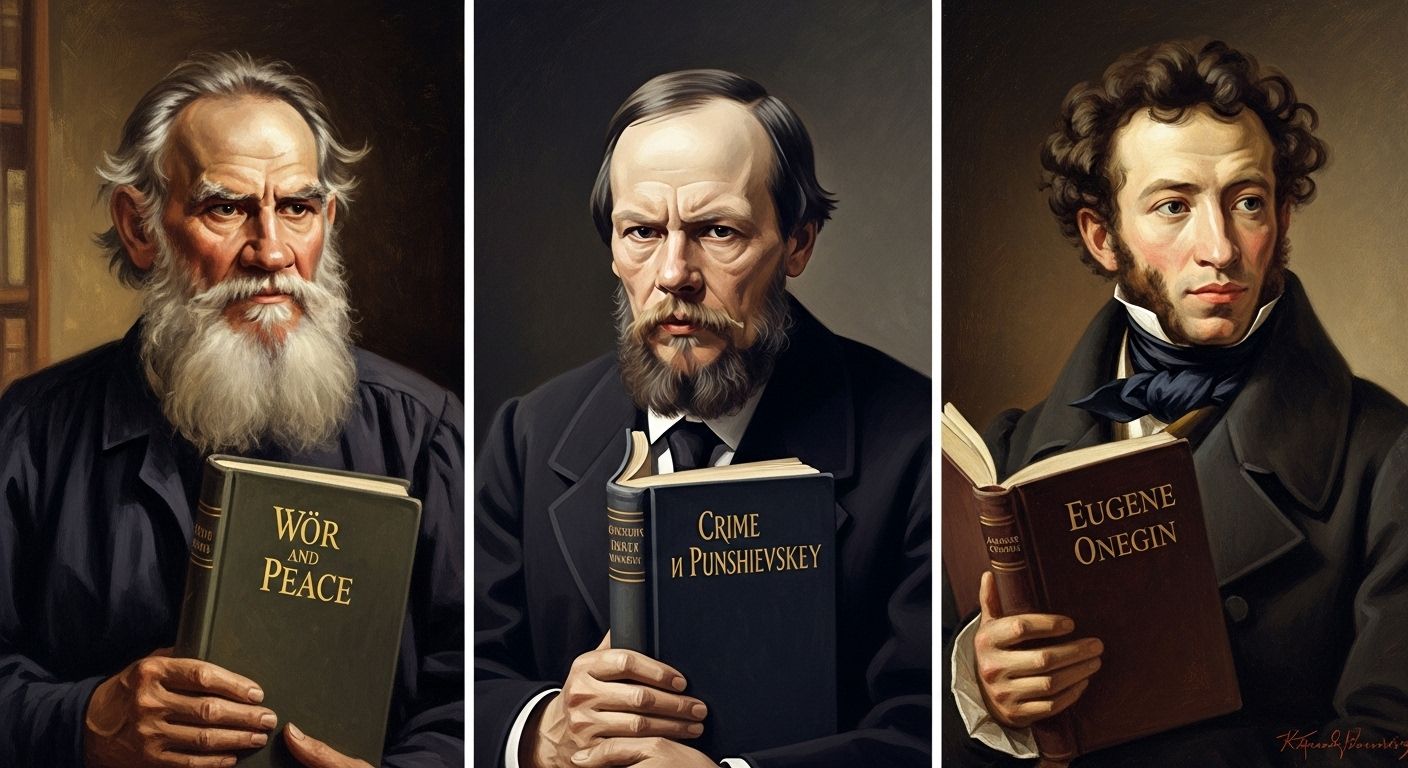
When people say “the big three russian famous writers,” they’re usually pointing to Leo Tolstoy, Fyodor Dostoevsky, and Anton Chekhov. But calling them “the big three” undersells how wildly different they were. Tolstoy was the aristocratic moralist who gave us 1,200-page epics questioning fate, free will, and whether Napoleon really mattered. Dostoevsky was the fever-dream psychologist who wrote like his characters were screaming directly into your skull. And Chekhov? He was the quiet observer who showed that tragedy and comedy often wear the same face. What ties these russian famous writers together isn’t style—it’s obsession. Obsession with truth, with suffering, with the messy business of being human. They weren’t just writing novels; they were building cathedrals out of doubt and desire. And honestly? We’re still pilgrims visiting those cathedrals.
Nobel Prizes and Political Exile: The Complicated Legacy of Russian Famous Writers
Not all russian famous writers got cozy with the state. In fact, many got exiled, censored, or straight-up disappeared for saying things the regime didn’t like. But hey—some did snag that Nobel bling. Ivan Bunin, the first Russian to win the Nobel Prize in Literature (1933), was basically the anti-Soviet poster boy: he fled after the revolution and kept writing about lost gentry and fading beauty. Then there’s Boris Pasternak, whose *Doctor Zhivago* earned him the 1958 Nobel—but the USSR forced him to decline it. Aleksandr Solzhenitsyn later won in 1970 and actually accepted it… from exile. So while Tolstoy and Dostoevsky never saw a Nobel (the prize started in 1901), their spiritual heirs carried the torch of russian famous writers into the 20th century—often at great personal cost. Their legacy? Proof that words can be weapons, and pens mightier than tanks.
What Is Dostoevsky Most Famous For? Beyond the Brooding Bearded Meme
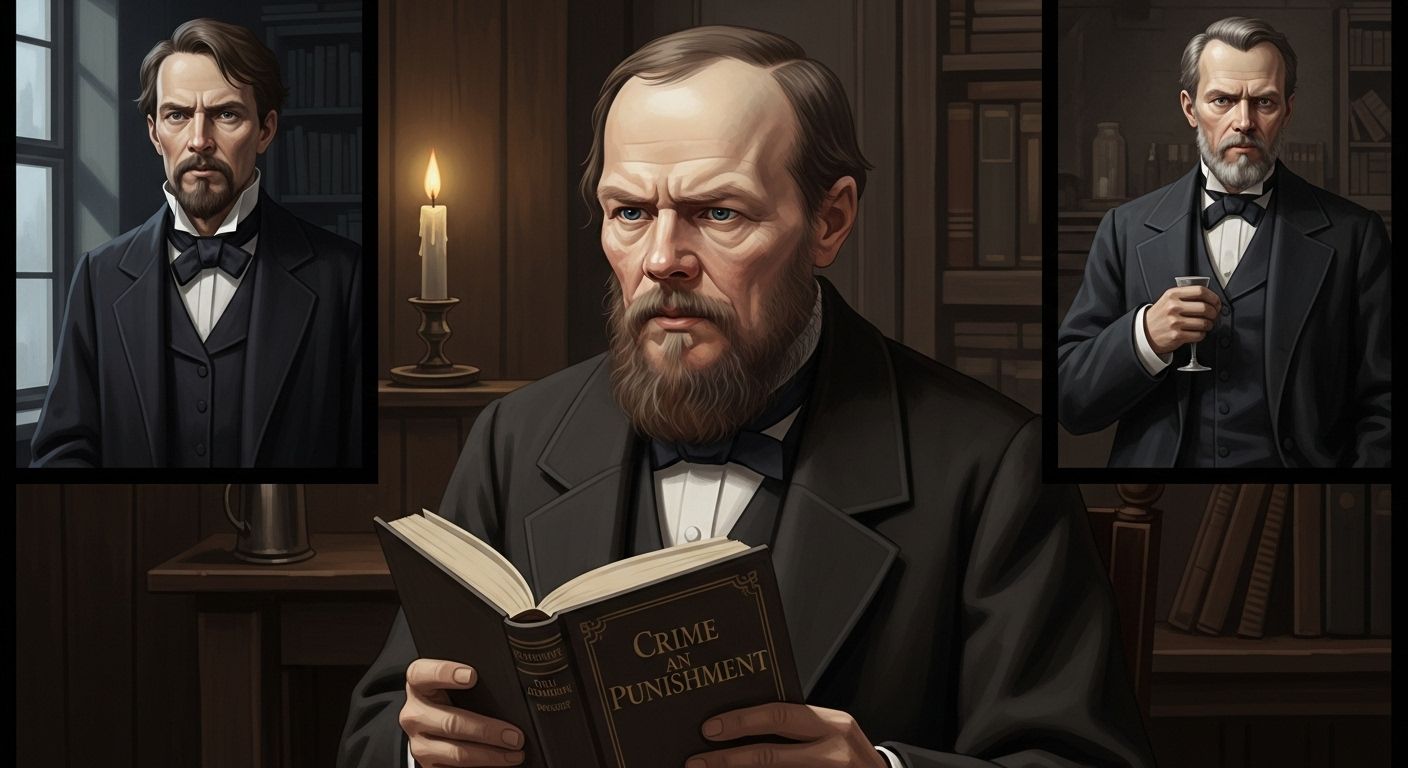
Alright, let’s cut through the Instagram quotes and dive into what russian famous writers like Fyodor Dostoevsky actually built. Dude’s most famous for *Crime and Punishment*—a psychological thriller where a broke student murders a pawnbroker “for the greater good” and then spends 500 pages unraveling mentally. But that’s just the tip. His masterpiece *The Brothers Karamazov*? That’s the Mount Everest of moral philosophy disguised as family drama. It tackles God, free will, evil, and whether love can redeem a broken world. Dostoevsky’s superpower was making guilt feel physical. You don’t just read his work—you sweat through it. And that’s why russian famous writers like him remain unavoidable: they force you to stare into your own abyss. No wonder Nietzsche said, “Dostoevsky is the only psychologist from whom I had anything to learn.”
How Female Voices Got Erased from the Canon of Russian Famous Writers
Let’s address the elephant in the room: when we say “russian famous writers,” we’re usually talking about dudes. But women were writing too—just not getting the same spotlight. Take Anna Akhmatova: poet, survivor of Stalin’s purges, and voice of silent resistance. Or Marina Tsvetaeva, whose lyrical intensity rivals Rilke’s. Even earlier, Karolina Pavlova penned feminist critiques in 19th-century salons. Yet, their names rarely sit beside Tolstoy in “Great Books” lists. Why? Patriarchy, politics, and publishing gatekeeping. The canon of russian famous writers was shaped by male critics who valued epic scale over intimate lyricism—and who assumed “universal” meant “male.” Thankfully, modern scholars are dusting off these voices and proving that the Russian literary soul has always been plural.
From Tsars to TikTok: How Russian Famous Writers Stay Relevant Today
You’d think 19th-century novels about serfs and existential despair wouldn’t vibe with Gen Z scrolling through Reels. But surprise—russian famous writers are having a moment. BookTok teens are swooning over Raskolnikov’s toxic hotness. Philosophy podcasts dissect *Notes from Underground* like it’s a self-help manual. Even video games reference Dostoevsky’s themes (looking at you, *Disco Elysium*). Why? Because the questions these russian famous writers asked—about alienation, meaning, justice—are timeless. In an age of algorithmic loneliness and political chaos, their raw honesty feels weirdly comforting. Plus, let’s be honest: there’s something deliciously dramatic about quoting a 500-page Russian novel to explain why you ghosted someone. “It’s not me—it’s my underground man complex.”
Reading Russian Famous Writers in Translation: Lost in Transmission or Gained in Depth?
Here’s the tea: no translation is perfect. When you read Tolstoy in English, you’re not getting the exact rhythm, puns, or cultural nuances of the original Russian. But—and this is a big but—some translators are low-key geniuses. Constance Garnett, early 20th-century trailblazer, brought Dostoevsky to the English world, even if she smoothed out his rough edges. More recently, Richard Pevear and Larissa Volokhonsky have retranslated the classics with grittier fidelity. So while you might miss a linguistic wink, you gain access to the emotional core. And honestly? The best russian famous writers transcend language. Their pain, joy, and confusion are so human that even imperfect translations hit hard. Just don’t pretend you’re getting the “full” experience—respect the gap, and maybe learn a little Cyrillic someday.
Common Misconceptions About Russian Famous Writers (No, They Weren’t All Depressed Alcoholics)
Pop culture loves painting russian famous writers as gloomy, vodka-swilling philosophers who never smiled. Sure, Dostoevsky had epilepsy and debt, and Chekhov was a doctor who coughed through half his life—but they also laughed, loved, and cracked jokes. Tolstoy farmed, played chess, and homeschooled his kids. Gogol burned manuscripts but also wrote absurdist comedies. Reducing russian famous writers to tortured stereotypes erases their humanity. Yes, their work grapples with darkness—but often with irony, warmth, or hope flickering underneath. Think of it like this: they stared into the void so we wouldn’t have to… or at least so we’d know we’re not alone when we do.
Where to Start If You’re New to Russian Famous Writers (And Where to Go Next)
If you’re dipping your toes into the icy waters of russian famous writers, don’t start with *War and Peace*. Seriously. Try Chekhov’s short stories—they’re tight, emotional, and under 20 pages. Then maybe *Notes from Underground* for a taste of Dostoevsky’s mind-bend. Once hooked, graduate to *Anna Karenina* or *The Idiot*. And if you’re feeling spicy, dive into Solzhenitsyn’s *One Day in the Life of Ivan Denisovich*—it’s short, brutal, and unforgettable. For deeper cuts, explore Pushkin’s poetry or Bulgakov’s satirical masterpiece *The Master and Margarita*. Oh, and while you’re exploring, don’t forget to check out the homepage of Slow Studies for more literary deep dives. You can also browse our curated collection in the Books category. And if global voices intrigue you, don’t miss our piece on books written by Chinua Achebe illuminate African identity struggles—because great literature knows no borders.
Frequently Asked Questions
Who is the most famous writer in Russia?
While fame is subjective, Leo Tolstoy is widely regarded as the most famous writer in Russia. His novels War and Peace and Anna Karenina are cornerstones of world literature and exemplify the depth and scope associated with russian famous writers.
Who are the big three Russian writers?
The “big three” russian famous writers are Leo Tolstoy, Fyodor Dostoevsky, and Anton Chekhov. Each brought a distinct voice—epic realism, psychological intensity, and subtle tragicomedy—that collectively defined Russian literary greatness.
Which Russian writer won the Nobel Prize?
Several russian famous writers have won the Nobel Prize in Literature, including Ivan Bunin (1933), Boris Pasternak (1958, declined under pressure), Mikhail Sholokhov (1965), and Aleksandr Solzhenitsyn (1970). Their works reflect both artistic excellence and political courage.
What is Dostoevsky most famous for?
Fyodor Dostoevsky is most famous for his psychological depth and moral exploration in novels like Crime and Punishment and The Brothers Karamazov. These works cement his status among the greatest russian famous writers, probing guilt, faith, and redemption with unmatched intensity.
References
- https://www.nobelprize.org/prizes/literature/
- https://www.britannica.com/topic/Russian-literature
- https://plato.stanford.edu/entries/dostoevsky/
- https://www.poetryfoundation.org/topics/russian-poets