Critical Thinking Examples in Nursing Save Lives Through Smart Care

- 1.
Ever Seen a Nurse Save a Life Before the Monitor Even Beeps?
- 2.
Why critical thinking examples in nursing Matter More Than You Think
- 3.
How Is critical thinking examples in nursing Used in Day-to-Day Healthcare?
- 4.
Classic critical thinking examples in nursing Scenarios That Save Lives
- 5.
What Makes critical thinking examples in nursing Different From General Critical Thinking?
- 6.
Nursing Interview Questions That Test critical thinking examples in nursing
- 7.
Real Good Examples of critical thinking examples in nursing in Action
- 8.
Barriers That Block critical thinking examples in nursing (And How to Bust ‘Em)
- 9.
Tools and Frameworks That Boost critical thinking examples in nursing
- 10.
Why critical thinking examples in nursing = Patient Trust + Better Outcomes
Table of Contents
critical thinking examples in nursing
Ever Seen a Nurse Save a Life Before the Monitor Even Beeps?
What if we told ya that the most heroic moments in hospitals don’t always involve sirens or dramatic music—but just a nurse squintin’ at a chart and goin’, “Hmm, that don’t sit right”? That, folks, is critical thinking examples in nursing in its rawest, realest form. We’ve all seen movies where docs shout orders during codes, but truth is? Nurses are the unsung radar of patient care, usin’ critical thinking examples in nursing to catch subtle shifts before they snowball. And no, it ain’t just about book smarts—it’s intuition polished by logic, like a grandma’s gut feel but with a stethoscope.
Why critical thinking examples in nursing Matter More Than You Think
In healthcare, a single second can mean life or “oh dang, we missed it.” That’s why critical thinking examples in nursing aren’t just fancy textbook filler—they’re lifelines. From noticing a slight drop in oxygen saturation to questioning an odd med dosage, nurses deploy critical thinking examples in nursing like ninja reflexes. It’s not about bein’ paranoid; it’s about bein’ prepared. And honestly? That mindset keeps hospitals from turnin’ into episode one of a medical thriller gone wrong.
How Is critical thinking examples in nursing Used in Day-to-Day Healthcare?
Picture this: a post-op patient says they’re “fine,” but their grip’s sweaty, their breathing’s shallow, and they’re avoidin’ eye contact. A rookie might log “stable.” A sharp nurse? They smell sepsis brewin’ and call rapid response—boom, crisis averted. That’s critical thinking examples in nursing at work. Whether it’s prioritizin’ tasks during shift chaos, adaptin’ care for cultural preferences, or double-checkin’ a doctor’s order that looks off, critical thinking examples in nursing turn routine checks into rescue missions.
Classic critical thinking examples in nursing Scenarios That Save Lives
Let’s break down some real-deal situations where critical thinking examples in nursing made all the difference:
• A med-surg nurse spots a diabetic patient’s confusion and shaky hands—realizes it’s hypoglycemia, not dementia.
• An ER nurse advocates for an elderly fall victim who’s “just bruised”—later found to have internal bleeding.
• A pediatric nurse notices a mom’s anxiety isn’t just nervousness—it’s postpartum depression needing intervention.
These ain’t plot twists—they’re daily bread in the world of critical thinking examples in nursing. And each one proves that observation + logic = better outcomes.
What Makes critical thinking examples in nursing Different From General Critical Thinking?
Here’s the tea: while general critical thinking might help you pick the best avocado at the market, critical thinking examples in nursing operate under pressure, with stakes higher than your rent. It’s contextual, urgent, and deeply human. You’re not just analyzin’ data—you’re readin’ faces, tones, family dynamics, and chart trends all at once. Plus, there’s an ethical layer: fairness, dignity, and advocacy woven into every call. In short, critical thinking examples in nursing blend heart and head like no other profession.
Nursing Interview Questions That Test critical thinking examples in nursing
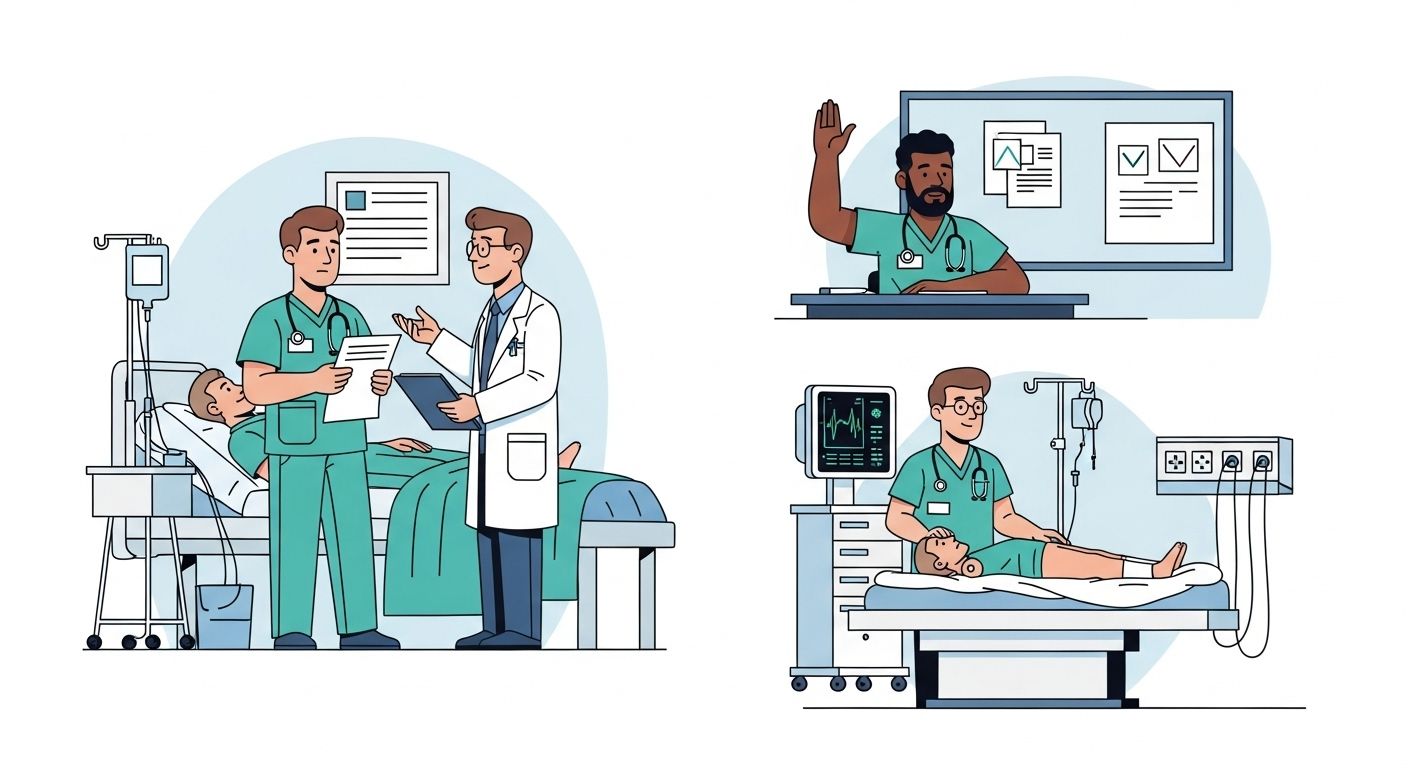
Wanna land a gig at a top hospital? Be ready for questions like, “A patient’s BP drops suddenly—what do you do first?” or “How’d you handle a doctor dismissing your concern?” These aren’t gotcha questions—they’re probes into your critical thinking examples in nursing muscle. Interviewers wanna see if you assess, act, and communicate like a pro. Pro tip: use the STAR method (Situation, Task, Action, Result) and slip in real critical thinking examples in nursing from your clinicals. Bonus points if you mention teamwork—‘cause nobody saves lives solo.
Real Good Examples of critical thinking examples in nursing in Action
Good critical thinking ain’t abstract—it’s tactical. Like when a nurse calculates fluid balance for a CHF patient and catches early overload before lungs drown. Or when they reframe pain management for a veteran who refuses opioids due to PTSD. These are critical thinking examples in nursing rooted in empathy, evidence, and experience. And get this: studies show units with high critical thinking scores report up to 23% fewer adverse events. That’s not just smart care—it’s safer care.
Barriers That Block critical thinking examples in nursing (And How to Bust ‘Em)
Despite its importance, critical thinking examples in nursing can hit roadblocks: understaffin’, burnout, rigid hierarchies (“The MD said it, so it’s law!”), or even tech overload drownin’ out human cues. But savvy nurses find workarounds—like peer huddles to cross-check concerns or using SBAR (Situation-Background-Assessment-Recommendation) to speak up clearly. Remember: critical thinking examples in nursing thrive in environments that value questions over silence. So if your unit shuns curiosity? Maybe it’s time to glow up elsewhere.
Tools and Frameworks That Boost critical thinking examples in nursing
Check out how common tools supercharge critical thinking examples in nursing:
| Tool/Framework | Use Case | Impact on critical thinking examples in nursing |
|---|---|---|
| ABCDE Assessment | Emergency triage | Prioritizes life threats logically |
| Nursing Process (ADPIE) | Care planning | Structures analysis → action |
| Root Cause Analysis | After near-misses | Prevents repeat errors |
| Clinical Judgment Model | Decision simulation | Builds pattern recognition |
These ain’t just acronyms—they’re armor for your brain in the wild west of healthcare. Master ‘em, and your critical thinking examples in nursing will shine like a new badge.
Why critical thinking examples in nursing = Patient Trust + Better Outcomes
At the end of the day, patients don’t just need meds—they need someone who *sees* them. When a nurse uses critical thinking examples in nursing to tailor care (“She’s not “non-compliant”—she can’t afford her insulin”), trust blooms. And trusted patients follow plans. Follow plans → fewer readmits → lower costs (we’re talkin’ real savings—up to $6,000 USD per avoided hospitalization). So yeah, critical thinking examples in nursing isn’t just noble—it’s economical. And honestly? Kinda magical.
For more deep dives, swing by our Slow Studies homepage, browse the Analysis section, or explore how these skills cross over in critical thinking skills means sharper analysis in everyday life.
Frequently Asked Questions
What are examples of critical thinking nursing interview questions?
Common critical thinking nursing interview questions include: “Describe a time you caught a potential medication error,” “How would you handle a patient refusing treatment for cultural reasons?” or “A vital sign trend looks off—what steps do you take?” These questions assess your ability to apply critical thinking examples in nursing under pressure while maintaining patient safety and dignity.
What are good examples of critical thinking?
Good examples of critical thinking include evaluating evidence before forming a conclusion, recognizing biases in decision-making, and adapting solutions based on new data. In healthcare, strong critical thinking examples in nursing involve questioning inconsistencies in patient data, advocating for overlooked symptoms, and collaborating across disciplines to optimize care—proving that sharp minds save lives.
How is critical thinking used in healthcare?
In healthcare, critical thinking is used to assess complex patient conditions, prioritize interventions, prevent errors, and personalize care plans. Nurses rely on critical thinking examples in nursing daily—whether interpreting subtle clinical changes, navigating ethical dilemmas, or communicating concerns to the care team—ensuring decisions are both evidence-based and human-centered.
Why is critical thinking important in nursing?
Critical thinking is vital in nursing because it enables quick, accurate, and empathetic responses in high-stakes environments. Through critical thinking examples in nursing, professionals reduce risks, improve patient outcomes, and build trust. Without it, care becomes robotic—and in a field where lives hang in the balance, that’s simply not an option.
References
- https://www.ncbi.nlm.nih.gov/pmc/articles/PMC6104729/
- https://www.nursingworld.org/practice-policy/workforce/health-care-workforce/critical-thinking-in-nursing/
- https://www.sciencedirect.com/science/article/pii/S235272182100043X
- https://www.aacnnursing.org/Portals/0/PDFs/Publications/Critical-Thinking-Tool-Kit.pdf
- https://www.journalofnursingeducation.com/article/S0148-4834(15)30112-6/fulltext