Books Written by Truman Capote Blend Fiction with Stark Reality
- 1.
What Even Is a “Truman Capote Book” Anyway? A Southern Gothic Cocktail with a Side of Truth
- 2.
Breakfast at Tiffany’s: More Than Just a Pretty Audrey Hepburn Poster
- 3.
In Cold Blood: The Book That Invented True Crime as We Know It
- 4.
The Early Works: Where Capote Learned to Haunt the Page
- 5.
What Was the Last Book Truman Capote Wrote? The Ghost of Answered Prayers
- 6.
Books Written by Truman Capote After In Cold Blood: The Slow Fade
- 7.
Capote and Harper Lee: The Friendship That Shaped American Letters
- 8.
Style Over Substance? Why Capote’s Prose Still Slays
- 9.
Truman Capote’s Cause of Death: When the Party Finally Ended
- 10.
Where to Start If You’re New to Books Written by Truman Capote (And Where to Go Next)
Table of Contents
books written by truman capote
What Even Is a “Truman Capote Book” Anyway? A Southern Gothic Cocktail with a Side of Truth
Ever read somethin’ that felt like it was whisperin’ secrets straight into your ear while sippin’ mint julep on a porch swing in Alabama? That’s the vibe of books written by Truman Capote. Capote wasn’t just writin’—he was conjurin’. With a voice smoother than bourbon and sharper than a switchblade, his work straddled fiction and fact like a high-wire act over a swamp full of alligators. Born in New Orleans but raised on the ragged edges of the Deep South, Capote turned pain into poetry and gossip into gospel. The books written by Truman Capote ain’t just stories—they’re séances for lost souls, society dames, and murderers alike. And yeah, he did it all in a silk robe with a cigarette dangling like punctuation.
Breakfast at Tiffany’s: More Than Just a Pretty Audrey Hepburn Poster
Let’s clear this up right quick: Breakfast at Tiffany’s ain’t about jewelry. It’s about loneliness dressed in pearls. Published in 1958, this novella introduced Holly Golightly—a flaky, fabulous socialite who floats through Manhattan like a dandelion seed on a breeze. But beneath the glamour? She’s runnin’ from poverty, trauma, and a past that won’t stay buried. The books written by Truman Capote often explore outsiders, and Holly’s the queen of ‘em. Critics called her shallow; Capote knew better. She’s survival incarnate. And fun fact: the original ending was way darker (think prison, not Paris). Hollywood softened it—but the soul of the story? Still pure Capote: tender, tragic, and tinged with jazz.
In Cold Blood: The Book That Invented True Crime as We Know It
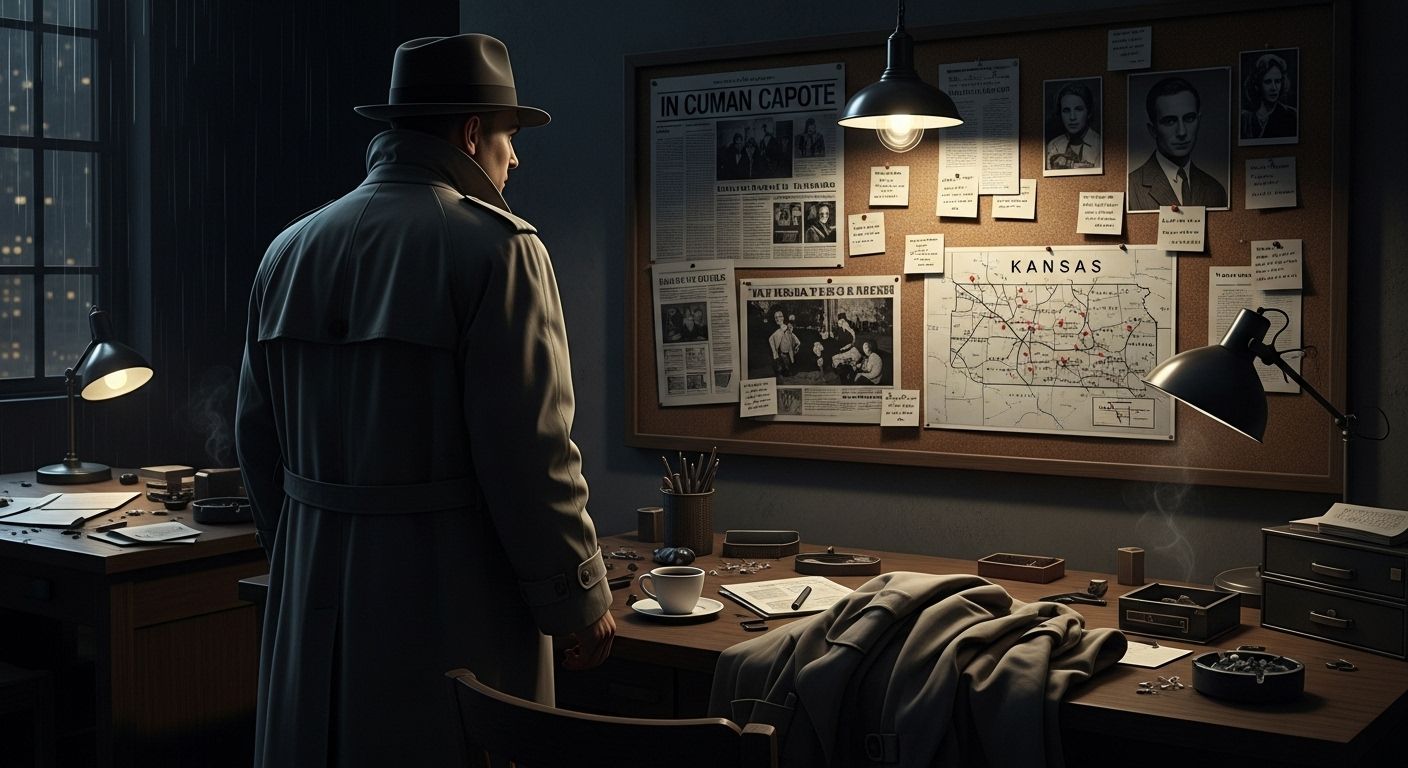
If you’ve ever binged a true crime podcast or stayed up till 3 a.m. watchin’ *Dateline*, you owe a debt to one of the most groundbreaking books written by Truman Capote. *In Cold Blood* (1966) didn’t just report a murder—it lived inside it. When four members of the Clutter family were slaughtered in Holcomb, Kansas, Capote didn’t send a reporter. He went himself. For six years, he interviewed cops, townsfolk, and even the killers—Perry Smith and Dick Hickock—until their voices haunted his dreams. The result? A “nonfiction novel” so immersive, it blurred the line between journalism and literature. Some say it cost him his sanity. Others say it redefined storytelling. Either way, every book written by Truman Capote after this carried its shadow.
The Early Works: Where Capote Learned to Haunt the Page
Before he was swanning around with Babe Paley, Capote was a pale, bookish kid scribbling tales in Monroeville, Alabama (yes, Harper Lee’s childhood neighbor—more on that later). His debut novel, *Other Voices, Other Rooms* (1948), shocked readers with its queer undertones and gothic atmosphere. At just 23, Capote wrote like he’d already lived three lifetimes. Then came *The Grass Harp* (1951)—a lyrical fable about found family and treehouses that reads like a lullaby dipped in moonshine. These early books written by Truman Capote prove he wasn’t just a stylist; he was a mythmaker. And though they lack the cold glare of *In Cold Blood*, they pulse with the same emotional honesty that made him unforgettable.
What Was the Last Book Truman Capote Wrote? The Ghost of Answered Prayers
Here’s the heartbreak: Truman Capote never finished his magnum opus. *Answered Prayers* was supposed to be his Proustian takedown of high society—the ultimate roman à clef exposing his jet-set friends. But when he published an excerpt in *Esquire* titled “La Côte Basque, 1965,” the elite turned on him. Overnight, he went from darling to pariah. The fallout destroyed his social circle… and his will to write. Though he tinkered with it till his death, the full book written by Truman Capote remains lost—just fragments, rumors, and regrets. Some say it was genius. Others say it was spite. Either way, its ghost looms over his legacy like an unfinished symphony.
Books Written by Truman Capote After In Cold Blood: The Slow Fade
After *In Cold Blood*, Capote’s output slowed to a trickle. He published *Music for Chameleons* (1980)—a hybrid of short stories, memoirs, and interviews that felt like a farewell tour. One piece, “Handcarved Coffins,” even claimed to be another “nonfiction novel,” though its truthfulness is widely disputed. Beyond that? Mostly magazine pieces, speeches, and TV appearances. The fire that fueled his earlier books written by Truman Capote had dimmed, drowned in alcohol, pills, and isolation. It’s a sobering reminder: even literary giants can burn out. Still, *Music for Chameleons* offers glimpses of the old magic—especially in his conversations with Perry Smith, which read like confessions from beyond the grave.
Capote and Harper Lee: The Friendship That Shaped American Letters
You can’t talk about books written by Truman Capote without mentionin’ Nelle Harper Lee. These two Alabama kids grew up side by side, swapping stories under southern oaks. Later, when Lee researched *To Kill a Mockingbird*, Capote helped her with legal details. And when Capote headed to Kansas for *In Cold Blood*, guess who tagged along? Lee. She’s the uncredited backbone of that book—interviewing locals, taking notes, offering moral ballast. Their friendship, though strained later by fame and jealousy, proves that great literature is rarely made in solitude. The books written by Truman Capote and Lee form a diptych: one about innocence lost in the South, the other about evil exposed in the Midwest. Two sides of the same cracked American mirror.
Style Over Substance? Why Capote’s Prose Still Slays
Some critics sniff that Capote cared more about glitter than grit. But honey, have you *read* his sentences? Take this from *Breakfast at Tiffany’s*: “I am always drawn back to places where I have lived, the houses and their neighborhoods.” Simple? Sure. But layered with longing, rhythm, and restraint. Capote’s prose is surgical—every word placed like a diamond in a setting. Even in his darkest books written by Truman Capote, there’s beauty in the bleakness. He once said, “I believe more in the scissors than I do in the pencil.” And it shows. No fat. Just nerve, nuance, and narrative precision that still makes writers weep into their whiskey.
Truman Capote’s Cause of Death: When the Party Finally Ended
Let’s get real for a sec. Truman Capote died on August 25, 1984, at age 59. Official cause? Liver disease complicated by phlebitis and multiple drug intoxication. Translation: decades of cocktails, cocaine, and emotional chaos caught up with him. His final years were spent mostly alone, exiled from the society he once ruled. It’s a grim end for a man who once declared, “I’m a alcoholic. I’m a drug addict. I’m a homosexual. I’m a genius.” But maybe that’s the tragedy of the books written by Truman Capote: they demanded everything from him, and he gave it all—until there was nothing left to give.
Where to Start If You’re New to Books Written by Truman Capote (And Where to Go Next)
If you’re fresh to the world of books written by Truman Capote, don’t dive headfirst into *Answered Prayers*. Start with *Breakfast at Tiffany’s*—it’s short, stylish, and surprisingly sad. Then move to *In Cold Blood* for a masterclass in narrative tension. After that, try *Other Voices, Other Rooms* if you’re feelin’ gothic, or *Music for Chameleons* if you want the late-period confessional vibe. And while you’re exploring, don’t forget to swing by the homepage of Slow Studies for more deep dives into literary legends. You can also browse our curated shelves in the Books section. And if modernist pioneers intrigue you, check out our companion piece on books written by Virginia Woolf pioneer modernist thought streams—because great writing always echoes across time.
Frequently Asked Questions
What are Truman Capote's most famous books?
Truman Capote’s most famous books include Breakfast at Tiffany’s and In Cold Blood. These works exemplify the range of books written by Truman Capote, blending lyrical fiction with pioneering true crime narrative.
What was Truman Capote's cause of death?
Truman Capote died from liver disease exacerbated by phlebitis and drug intoxication. His lifestyle heavily influenced his health, marking a tragic end to the life behind many iconic books written by Truman Capote.
What was the last book Truman Capote wrote?
The last completed book Truman Capote published was Music for Chameleons (1980). His intended masterpiece, Answered Prayers, remained unfinished—making it the most haunting of all books written by Truman Capote.
What books did Truman Capote write after In Cold Blood?
After In Cold Blood, Truman Capote published only one major work: Music for Chameleons (1980). Though he worked on Answered Prayers, no complete version was released, leaving a sparse but poignant trail of books written by Truman Capote in his final decades.
References
- https://www.britannica.com/biography/Truman-Capote
- https://www.penguinrandomhouse.com/authors/4235/truman-capote
- https://www.nytimes.com/1984/08/26/obituaries/truman-capote-is-dead-at-59-author-of-in-cold-blood-and-breakfast-at-tiffany-s.html
- https://www.poetryfoundation.org/topics/truman-capote