Books Written by Ngugi Wa Thiong O Challenge Colonial Narratives
- 1.
Why Ngũgĩ wa Thiong’o Still Matters in Today’s Literary Landscape
- 2.
The Political Pulse Behind Every Page of Ngũgĩ’s Work
- 3.
From English to Gĩkũyũ: The Language Rebellion
- 4.
Decoding the Symbolism in Ngũgĩ’s Most Celebrated Novels
- 5.
How Ngũgĩ’s Plays Amplify His Literary Vision
- 6.
The Global Reach of a Kenyan Voice
- 7.
Ngũgĩ vs. the Canon: Challenging Western Literary Hegemony
- 8.
Themes That Keep Reappearing in Ngũgĩ’s Oeuvre
- 9.
Ngũgĩ’s Influence on Contemporary African Writers
- 10.
Where to Start If You’re New to Ngũgĩ’s Universe
Table of Contents
books written by ngugi wa thiong o
Why Ngũgĩ wa Thiong’o Still Matters in Today’s Literary Landscape
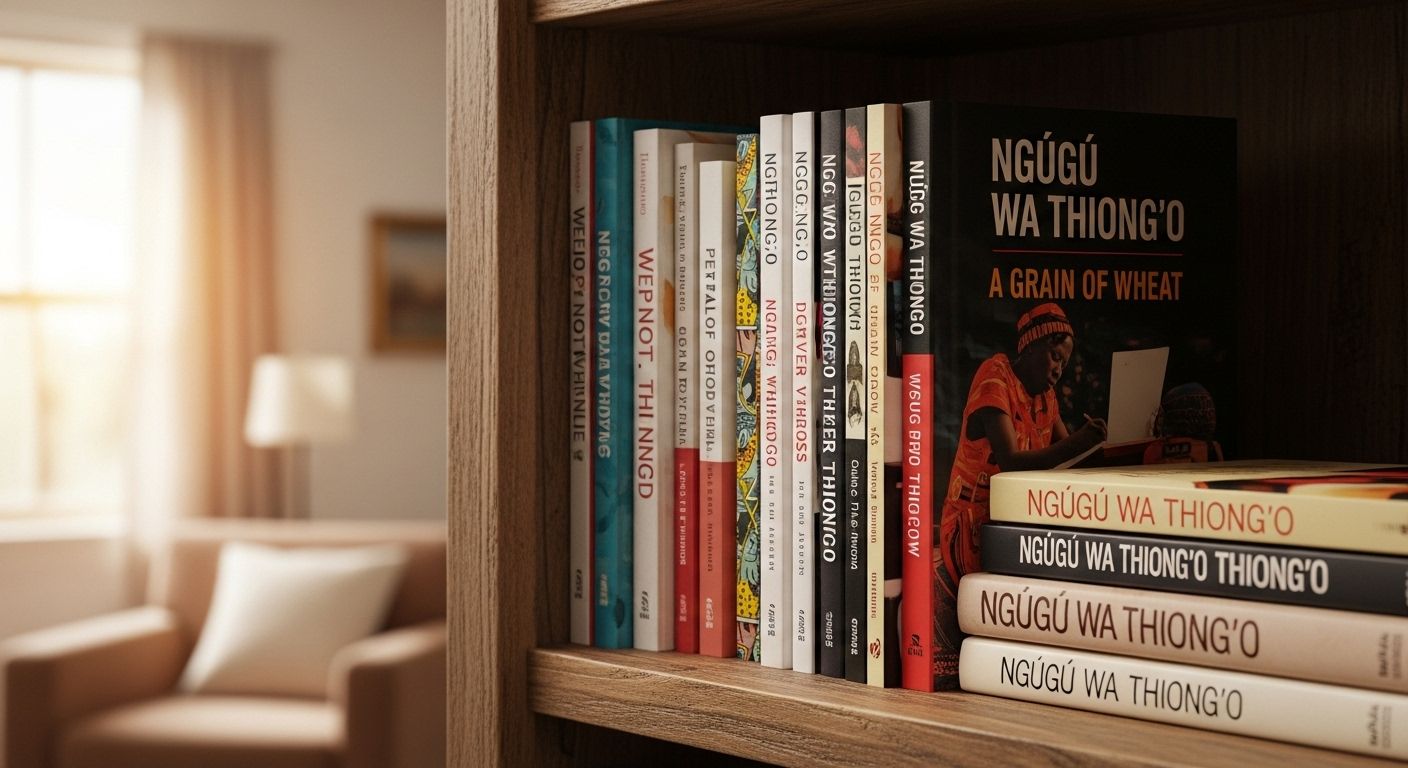
Ever wonder why some writers just refuse to fade into the dusty corners of literary history? Well, if you’ve ever stumbled upon the phrase “books written by Ngũgĩ wa Thiong’o,” you already know you’re dealing with a heavyweight. Born in Kenya but echoing across continents, Ngũgĩ didn’t just write stories—he rewrote the rules. His books written by Ngũgĩ wa Thiong’o aren’t just novels; they’re acts of resistance, love letters to Gĩkũyũ, and middle fingers to colonial grammar. And let’s be real—when a man switches from writing in English to his mother tongue just to spit truth more authentically? That’s not just bold—it’s revolutionary.
The Political Pulse Behind Every Page of Ngũgĩ’s Work
You can’t talk about books written by Ngũgĩ wa Thiong’o without diving headfirst into politics. Like, imagine sipping sweet tea on a porch while your country burns—that’s the vibe he refuses to accept. From detention without trial to exile, his life reads like one of his own novels. But here’s the kicker: every line of his fiction pulses with the heartbeat of post-colonial Africa. Whether it’s Petals of Blood or Devil on the Cross, his books written by Ngũgĩ wa Thiong’o dissect capitalism, corruption, and cultural erasure with surgical precision. Dude didn’t just write books—he wrote manifestos wrapped in metaphors.
From English to Gĩkũyũ: The Language Rebellion
Here’s a spicy twist: Ngũgĩ once wrote in English—the language of his colonizers—but then said, “Nah, I’m good,” and switched to Gĩkũyũ full-time. Why? Because for him, books written by Ngũgĩ wa Thiong’o in African languages aren’t just literature—they’re reclamation. Language, he argues, is the soul of a people. So when you read his children’s tale Njamba Nene and the Cruel Chief in Gĩkũyũ, you’re not just reading a story—you’re participating in decolonization. And honestly? That’s cooler than a snow cone in July.
Decoding the Symbolism in Ngũgĩ’s Most Celebrated Novels
If you’ve ever tried to unpack the symbolism in Weep Not, Child or A Grain of Wheat, congrats—you’ve entered the literary Olympics. The books written by Ngũgĩ wa Thiong’o are layered like an onion: peel one back, and you’ll cry (but in a good way). Take the fig tree in A Grain of Wheat—it’s not just a tree; it’s memory, betrayal, and hope tangled in bark. Or the cross in Devil on the Cross, which isn’t holy—it’s a stage for capitalist demons. Every object breathes ideology. And that’s the magic of his books written by Ngũgĩ wa Thiong’o: nothing’s just what it seems.
How Ngũgĩ’s Plays Amplify His Literary Vision
Hold up—did you know Ngũgĩ didn’t just stick to novels? His plays, like I Will Marry When I Want, are firecrackers of social critique. Written in Gĩkũyũ and performed in rural Kenya, these works turned theater into protest. The books written by Ngũgĩ wa Thiong’o include drama that doesn’t whisper—it shouts from mountaintops. And get this: after staging that play, he was thrown in prison without trial. Talk about art with consequences. His theatrical works prove that books written by Ngũgĩ wa Thiong’o aren’t confined to paper—they live in voices, gestures, and collective memory.
The Global Reach of a Kenyan Voice
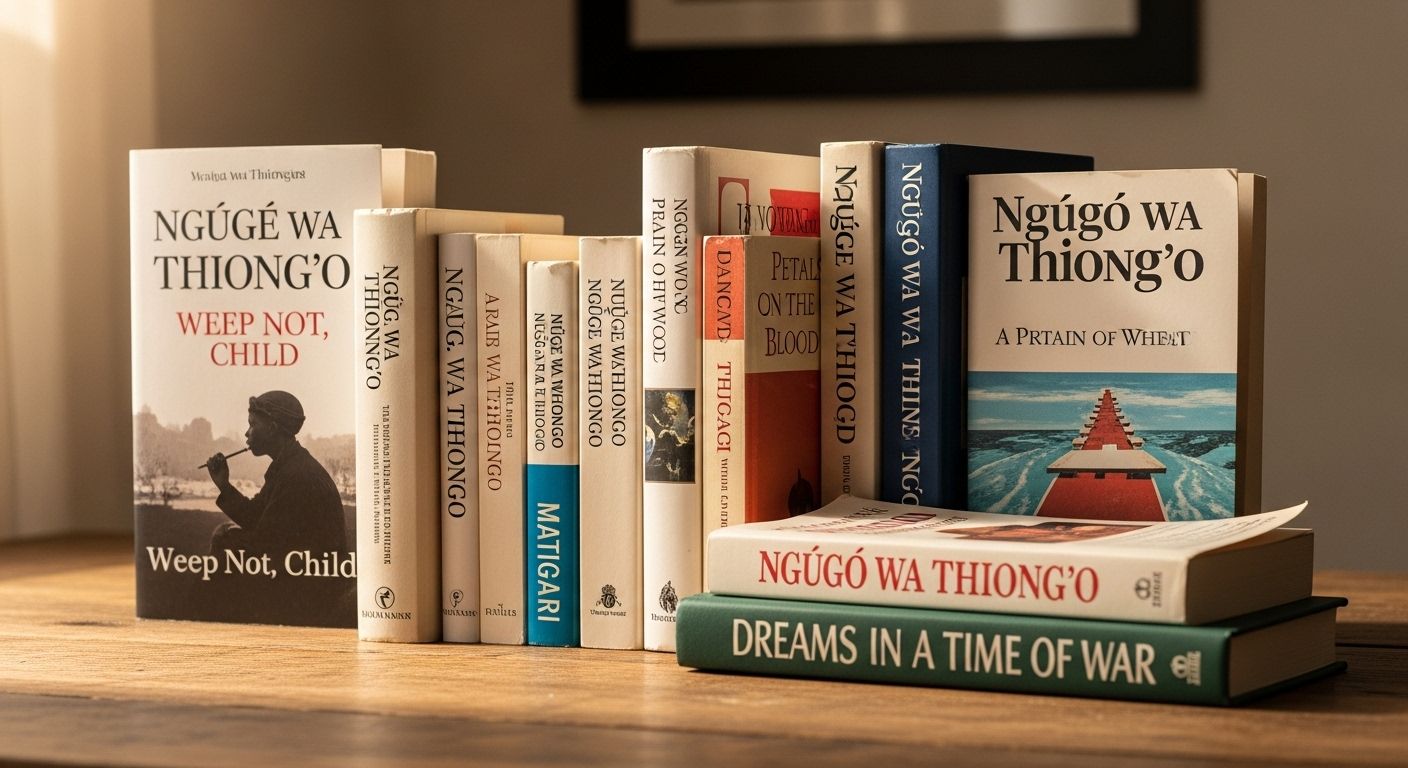
Don’t let the Nairobi address fool you—Ngũgĩ’s influence stretches from Harlem to Hanoi. Universities worldwide teach his books written by Ngũgĩ wa Thiong’o alongside Fanon and Achebe. Translated into over 30 languages, his work resonates with anyone who’s ever felt crushed by empire. Even in Brooklyn book clubs, folks debate whether Karega in Petals of Blood is naive or noble. That’s the power of his storytelling: it’s local in root, global in branch. And honestly? The world needs more books written by Ngũgĩ wa Thiong’o—not fewer.
Ngũgĩ vs. the Canon: Challenging Western Literary Hegemony
Let’s cut through the noise: the Western literary canon loves to pretend Africa had no stories before missionaries showed up. Enter Ngũgĩ, mic drop in hand. His entire career is a rebuttal to that nonsense. The books written by Ngũgĩ wa Thiong’o insist that African epistemologies matter—that oral traditions, proverbs, and indigenous cosmologies are valid forms of knowledge. He even co-founded the Gĩkũyũ-language publishing house Mutiiri to prove it. So yeah, when you read his books written by Ngũgĩ wa Thiong’o, you’re not just reading—you’re dismantling centuries of erasure.
Themes That Keep Reappearing in Ngũgĩ’s Oeuvre
Land. Betrayal. Memory. Resistance. If you’ve read more than two books written by Ngũgĩ wa Thiong’o, you’ve seen these themes dance like ghosts through every chapter. Land isn’t just dirt—it’s identity stolen, fought for, mourned. Betrayal isn’t just personal—it’s political, often dressed in suits and speaking fluent English. And memory? It’s the weapon the oppressed wield when history tries to gaslight them. These motifs aren’t repetitive—they’re ritualistic, like drumbeats calling the community to remember. That’s the heartbeat of his books written by Ngũgĩ wa Thiong’o.
Ngũgĩ’s Influence on Contemporary African Writers
Ask any rising African writer who their north star is, and half’ll say Ngũgĩ. His courage to write in indigenous languages inspired authors like Yvonne Adhiambo Owuor and Binyavanga Wainaina. The books written by Ngũgĩ wa Thiong’o opened doors—and broke chains—for a generation tired of performing “Africanness” for Western eyes. Now, writers code-switch between Swahili, Zulu, and English not as compromise, but as celebration. All because Ngũgĩ dared to say: “My tongue is my territory.” And that legacy lives in every page of today’s books written by Ngũgĩ wa Thiong’o-inspired fiction.
Where to Start If You’re New to Ngũgĩ’s Universe
Feeling overwhelmed by the sheer force of books written by Ngũgĩ wa Thiong’o? Start with Weep Not, Child—it’s his debut, raw and tender, set during the Mau Mau Uprising. Then glide into Wizard of the Crow, his satirical epic that skewers dictatorship with belly laughs and biting wit. Don’t skip his essays, either—Decolonising the Mind is basically the Bible for postcolonial lit nerds. And hey, if you’re craving more context, swing by Slow Studies for deep dives, check out the Books section for curated lists, or geek out over literary legacies in Famous Books and Writer Duos That Shaped Literary History Forever. Trust us—your brain will thank you.
Frequently Asked Questions
What is the top 10 most read book?
While lists vary, classics like The Bible, Quotations from Chairman Mao, and Harry Potter often dominate global readership charts. However, among postcolonial works, several books written by Ngũgĩ wa Thiong’o—especially Wizard of the Crow and Weep Not, Child—rank highly in academic and activist circles worldwide.
What is Ngũgĩ wa Thiong’o famous for?
Ngũgĩ wa Thiong’o is renowned for his politically charged fiction, his advocacy for African-language literature, and his sharp critiques of colonialism and neocolonialism. His books written by Ngũgĩ wa Thiong’o blend narrative artistry with radical theory, making him a pillar of global postcolonial thought.
What is Flannery O’Connor’s most famous book?
Flannery O’Connor is best known for her short story collection A Good Man Is Hard to Find and the novel Wise Blood. While unrelated to Ngũgĩ, it’s worth noting that both authors use grotesque realism to explore moral and spiritual crises—though their cultural contexts differ vastly. For readers exploring global voices, the contrast highlights the diversity within the very idea of “serious literature,” including powerful works like the books written by Ngũgĩ wa Thiong’o.
What is the name of 10 famous books?
Globally celebrated titles include 1984, To Kill a Mockingbird, One Hundred Years of Solitude, and Things Fall Apart. Among these giants, several books written by Ngũgĩ wa Thiong’o—such as Petals of Blood and Devil on the Cross—are increasingly recognized as essential reading for understanding 20th-century resistance literature.
References
- https://www.britannica.com/biography/Ngugi-wa-Thiongo
- https://www.penguinrandomhouse.com/authors/3055/ngugi-wa-thiongo
- https://africasacountry.com/2020/01/ngugi-wa-thiongos-decolonizing-the-mind-30-years-on
- https://www.theguardian.com/books/ngugiwathiongo